
Air travel is considered one of the safest modes of transportation in the world, yet unexpected events can occasionally disrupt even the most carefully planned journeys. One such incident involved United Flight UA967, a long-haul transatlantic flight that was unexpectedly diverted during its journey. The incident attracted attention among travelers and aviation enthusiasts because it demonstrated how airlines respond to technical issues mid-flight while prioritizing passenger safety.
The diversion of United Flight UA967 highlighted the complexity of aviation operations and the strict safety procedures that govern airline travel. While diversions can cause delays and inconvenience, they are often precautionary decisions made by pilots and airline operations teams to ensure the well-being of everyone on board.
This article explores the full story behind United Flight UA967’s diversion, including the flight’s route, the reason behind the decision, the experience of passengers, and the broader significance of such incidents in modern aviation.
Overview of United Flight UA967
United Flight UA967 is an international flight operated by United Airlines. The route typically connects Naples, Italy, to Newark, New Jersey, transporting hundreds of passengers across the Atlantic Ocean. The flight usually takes approximately ten hours, depending on weather conditions, air traffic, and operational factors.
Long-haul flights like UA967 require detailed planning and coordination. Airlines must consider fuel loads, crew schedules, aircraft maintenance, weather conditions, and international aviation regulations before departure. Every step is designed to ensure that flights operate smoothly and safely.
On the day of the incident, United Flight UA967 departed Naples later than scheduled due to operational delays. The aircraft eventually took off and began its transatlantic journey toward the United States. However, during the flight, an issue was detected that prompted the crew to make a critical decision.
Delay Before Departure
Before the diversion occurred, the flight was already experiencing delays at the departure airport. Reports indicated that the aircraft departed approximately three hours later than its original scheduled departure time.
Delays at airports can happen for various reasons, including:
- Aircraft maintenance checks
- Crew scheduling adjustments
- Airport congestion
- Weather conditions
- Operational or technical inspections
Although delays can be frustrating for passengers, they are often necessary to ensure that aircraft are safe and fully prepared for flight. Airlines typically perform extensive checks before allowing an aircraft to depart, especially for long international journeys.
Despite the delay, the flight eventually took off and began crossing the Atlantic Ocean.
The Technical Issue Mid-Flight
Several hours into the journey, the flight crew detected a technical issue onboard the aircraft. While airlines do not always publicly disclose specific details about such problems, the situation was serious enough for the pilots to consider diverting the aircraft.
Aircraft systems constantly monitor various components during flight, including:
- Engine performance
- Hydraulic systems
- Electrical systems
- Navigation equipment
- Cabin pressurization
If a warning indicator or irregular reading appears, pilots must evaluate the situation quickly and determine whether it is safe to continue the flight.
In the case of United Flight UA967, the crew decided that diverting the aircraft to a nearby airport would be the safest option.
Decision to Divert the Flight
The captain and flight crew have the ultimate responsibility for ensuring passenger safety. When an issue arises mid-flight, they must consider several factors before making a diversion decision.
These factors include:
- Distance to the nearest suitable airport
- Severity of the technical issue
- Weather conditions at potential landing locations
- Remaining fuel levels
- Availability of maintenance facilities
Because the aircraft was already crossing the Atlantic Ocean, the crew needed to select an airport capable of handling large international aircraft and providing technical support.
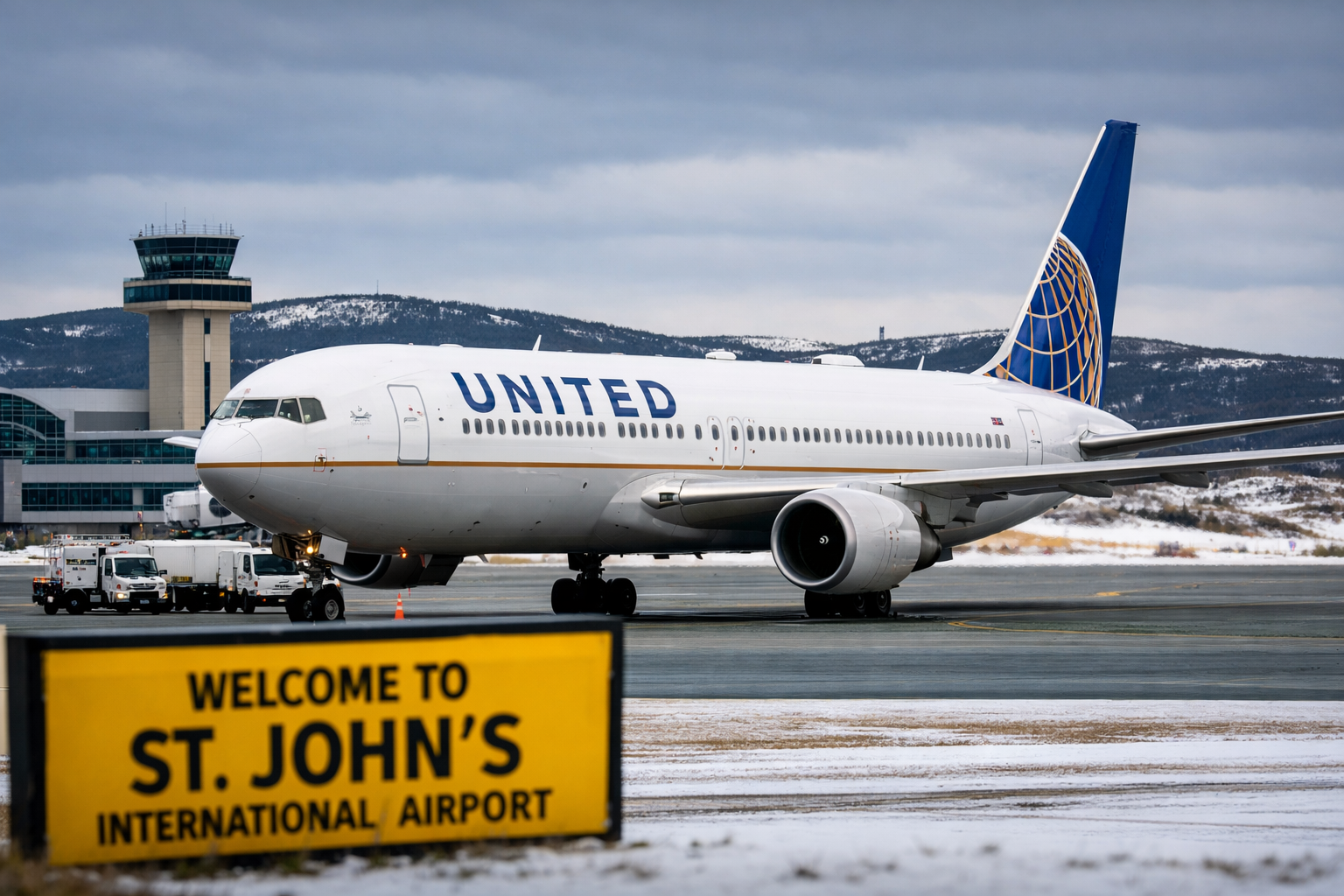
The decision was made to divert the flight to St. John’s International Airport in Newfoundland, Canada, a common diversion point for transatlantic flights due to its strategic location and well-equipped facilities.
Landing at the Alternate Airport
After approximately seven hours of flying, the aircraft safely landed at the diversion airport.
The landing was carried out without any injuries or emergency complications. Once the aircraft arrived on the ground, airline personnel and maintenance teams began evaluating the technical issue that had prompted the diversion.
Passengers were informed about the situation and reassured that the diversion was a precautionary measure taken to ensure their safety.
Diversions like this are part of standard aviation procedures and are designed to prevent minor technical problems from becoming serious emergencies.
Passenger Experience During the Diversion
For passengers on board, the diversion created a mixture of confusion, concern, and frustration. Many travelers were expecting a direct flight to the United States but suddenly found themselves landing in Canada instead.
However, cabin crews are trained to manage such situations calmly and professionally. Flight attendants typically provide updates, answer passenger questions, and ensure that everyone remains calm during the diversion process.
Passengers reported that the crew handled the situation efficiently, explaining that the diversion was necessary due to a technical concern.
Once on the ground, travelers faced additional waiting time while the airline arranged further travel plans.
Replacement Aircraft and Continued Journey
After the aircraft landed at the diversion airport, maintenance crews inspected the plane to determine whether it could safely continue the journey. In many cases, airlines choose to bring in a replacement aircraft rather than risk additional delays or complications.
For United Flight UA967, the airline arranged another aircraft to transport passengers to their final destination.
This process involved several logistical steps:
- Preparing the replacement aircraft
- Coordinating a new flight crew
- Transferring passenger baggage
- Managing immigration and security procedures
Eventually, passengers continued their journey to Newark. However, due to the diversion and additional procedures, the flight arrived more than ten hours later than originally scheduled.
Why Flight Diversions Happen
Although flight diversions may seem alarming, they are actually a routine part of aviation safety procedures.
Common reasons for diversions include:
1. Technical Issues
Aircraft systems are designed to detect potential mechanical problems early. When such issues arise, pilots may choose to land at the nearest suitable airport.
2. Medical Emergencies
If a passenger becomes seriously ill during a flight, the crew may divert to obtain immediate medical assistance.
3. Severe Weather
Thunderstorms, strong winds, or heavy turbulence may force pilots to change their route or land at another airport.
4. Security Concerns
In rare situations, security threats may require immediate landing at an alternate location.
5. Operational Issues
Unexpected airport closures or air traffic congestion can also lead to diversions.
In the case of United Flight UA967, the diversion was primarily due to a technical concern detected during the flight.
Aviation Safety Protocols
Modern aviation relies on strict safety protocols to minimize risks. Every aircraft is equipped with advanced monitoring systems that alert pilots to potential issues before they become dangerous.
Pilots undergo extensive training to handle unexpected situations, including:
- Emergency landings
- System failures
- Severe weather conditions
- In-flight diversions
Airlines also follow international safety regulations established by aviation authorities. These regulations ensure that aircraft are maintained properly and that crews are prepared for any situation.
The safe diversion of United Flight UA967 demonstrates how these safety systems work effectively in real-world situations.
Impact on Airline Operations
Flight diversions can be costly and disruptive for airlines. When a plane lands at an unexpected airport, the airline must manage several logistical challenges.
These may include:
- Passenger accommodations
- Replacement aircraft arrangements
- Crew scheduling adjustments
- Maintenance inspections
- Airport coordination
Despite these challenges, airlines always prioritize safety over operational convenience. A diversion may delay passengers, but it ensures that potential problems are addressed immediately.
Importance of Diversion Airports
Certain airports around the world are strategically positioned to serve as diversion points for long-haul flights.
St. John’s International Airport in Newfoundland is one such location. Because it lies along many transatlantic routes, it is frequently used when aircraft need to land unexpectedly during flights between Europe and North America.
These airports are equipped with:
- Long runways capable of handling large aircraft
- Advanced navigation systems
- Emergency response teams
- Aircraft maintenance facilities
Such infrastructure allows airlines to respond quickly when diversions occur.
Lessons From the UA967 Incident
The diversion of United Flight UA967 offers several important lessons about aviation safety.
Safety Comes First
Airlines prioritize passenger safety above all else. Even minor technical warnings can lead to diversions if there is any potential risk.
Pilot Training Matters
Pilots are trained extensively to handle complex situations and make rapid decisions during flights.
Preparedness Is Essential
Airlines maintain contingency plans for unexpected events, ensuring passengers can continue their journey as smoothly as possible.
Diversions Are Preventive Measures
Rather than indicating danger, diversions often show that safety systems are functioning exactly as intended.
Conclusion
The diversion of United Flight UA967 demonstrates how modern aviation prioritizes safety through proactive decision-making and strict operational procedures. What began as a delayed transatlantic flight ultimately became a real-world example of how airlines respond to technical issues mid-air.
Although passengers experienced significant delays and unexpected travel changes, the situation was handled safely and professionally by the flight crew and airline staff. The aircraft landed without incident, passengers were cared for, and the journey continued on a replacement aircraft.
Incidents like this remind travelers that aviation safety systems are designed to detect problems early and respond quickly. While diversions may be inconvenient, they represent the aviation industry’s commitment to ensuring that every flight arrives safely.
Ultimately, the story of United Flight UA967 shows that behind every flight lies a complex network of professionals, technology, and procedures working together to keep passengers safe—even when the unexpected occurs.
.
