
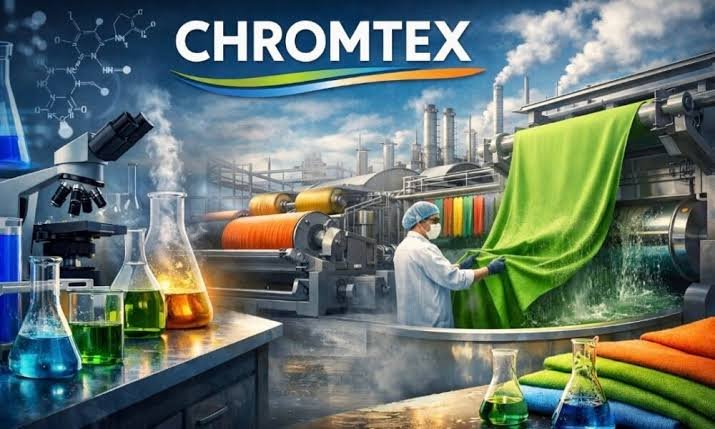
The textile industry has undergone a profound transformation over the past few decades, evolving from traditional weaving and dyeing methods to a highly automated and technologically advanced sector. At the heart of this evolution lies the field of textile chemicals—innovative solutions that enable manufacturers to improve fabric performance, color quality, and sustainability. Among the companies leading this technological revolution is Chromtex, a pioneer in developing advanced textile chemicals and process solutions that integrate modern science, digital monitoring, and eco-friendly practices.
This article explores Chromtex from a tech-focused perspective, examining its contributions to chemical engineering, research and development, sustainable production technologies, and the role of innovation in shaping the future of textiles.
The Technological Edge of Chromtex
Chromtex is more than a chemical supplier; it is a technology-driven organization that leverages scientific principles to solve complex problems in textile manufacturing. Modern textile production demands chemicals that are not only functional but also compatible with automation, digital control systems, and sustainable practices. Chromtex has positioned itself at the intersection of chemistry and technology, developing products that enable smarter, faster, and more environmentally responsible textile processing.
Integration with Modern Textile Machinery
One of the key technological strengths of Chromtex is the compatibility of its chemicals with modern textile machinery. Automated dyeing machines, finishing units, and digital printing systems require precise chemical formulations that maintain consistent quality across large-scale production. Chromtex develops chemicals with predictable behavior under variable temperature, pressure, and mechanical conditions, enabling manufacturers to achieve:
- Uniform dyeing results with minimal manual intervention.
- Reduced process variability by stabilizing chemical reactions during high-speed operations.
- Energy efficiency by optimizing chemical reactivity to suit low-temperature or rapid processing cycles.
This seamless integration of chemicals with machinery allows manufacturers to adopt Industry 4.0 practices, including real-time monitoring and digital process optimization.
Research and Development as a Technological Backbone
At the core of Chromtex’s technological leadership is its investment in research and development. The company operates advanced R&D laboratories where chemists, material scientists, and process engineers collaborate to innovate new formulations, test their behavior on various fibers, and simulate industrial-scale operations.
Key R&D initiatives at Chromtex include:
1. Advanced Chemical Formulations
Chromtex designs chemicals that interact intelligently with fabrics at the molecular level. For instance:
- Nanotechnology-based coatings that improve water repellency, UV resistance, and antimicrobial properties without affecting fabric softness.
- Smart dyes that respond to environmental stimuli such as temperature, light, or moisture.
- Eco-reactive auxiliaries that enable efficient dye absorption while minimizing water and energy consumption.
2. Process Simulation and Optimization
The company utilizes chemical modeling and process simulation software to predict how different chemicals behave under industrial conditions. This approach allows:
- Accurate scaling from laboratory experiments to factory operations.
- Identification of optimal chemical concentrations for specific fibers.
- Reduction of trial-and-error experiments, saving time, energy, and raw materials.
3. Green Chemistry and Sustainability
Technological innovation at Chromtex also focuses on minimizing environmental impact. The R&D team develops:
- Biodegradable chemical agents that degrade safely after use.
- Low-impact surfactants and wetting agents that reduce water pollution.
- Recyclable process chemicals that can be reused in multiple cycles of textile production.
Through these initiatives, Chromtex demonstrates how technology can simultaneously enhance performance and sustainability.
Smart Textiles and Functional Chemicals
The rise of smart textiles and functional fabrics has created new opportunities for chemical innovation. Chromtex is actively exploring technologies that enable textiles to perform beyond their traditional roles, transforming them into interactive, adaptive, or protective materials.
Some technological applications include:
1. Antimicrobial and Health-Oriented Finishes
Chromtex develops chemicals that provide fabrics with antimicrobial properties, reducing bacterial growth and odor formation. Such finishes are critical for healthcare textiles, sportswear, and home linens. Advanced research ensures that these chemicals remain effective after repeated washing and do not compromise fabric integrity.
2. Flame Retardancy and Safety Applications
For industrial, outdoor, and protective textiles, Chromtex produces advanced flame-retardant chemicals. These formulations are engineered to:
- Resist high temperatures without affecting mechanical strength.
- Be compatible with automated finishing lines and modern textile fibers.
- Meet stringent safety standards while reducing environmental toxicity.
3. UV Protection and Environmental Responsiveness
With growing awareness of environmental exposure, Chromtex has developed UV-protective coatings and light-sensitive dyes. These chemicals allow fabrics to adapt to sunlight intensity, providing both protection and enhanced aesthetic appeal.
Digital Technology and Data-Driven Chemical Processing
In line with Industry 4.0 principles, Chromtex leverages digital technology to optimize chemical processes. Modern textile production increasingly relies on data-driven decision-making, and Chromtex supports this trend through:
- Process Monitoring Software: Allows real-time tracking of chemical performance in industrial dyeing and finishing operations.
- Predictive Analytics: Uses historical data to recommend optimal chemical dosages and processing times, reducing waste.
- Integration with IoT Devices: Sensors embedded in machinery detect deviations in temperature, pH, or chemical concentration, enabling automated corrective actions.
By combining chemical expertise with digital monitoring, Chromtex empowers manufacturers to improve efficiency, reduce costs, and maintain consistent quality.
Sustainable Technology Initiatives
Sustainability is no longer optional in modern textile manufacturing; it is a technological challenge that requires innovation. Chromtex addresses this challenge through several technological measures:
- Water-Saving Processes: Chemicals designed to achieve full dye uptake with minimal water usage.
- Energy-Efficient Reactions: Formulations that work effectively at lower temperatures, reducing energy consumption.
- Effluent Treatment Integration: Chemicals that degrade safely and are compatible with modern wastewater treatment technologies.
- Circular Production Support: Products designed for recycling or reusing textiles without loss of functionality.
These innovations illustrate that sustainability and technology go hand in hand, and Chromtex is leading the way in eco-conscious chemical engineering.
Technological Applications Across Industries
Although Chromtex primarily serves textile manufacturers, the technological sophistication of its chemicals allows application across multiple industries:
- Apparel and Sportswear: Performance fabrics with moisture management, anti-microbial properties, and durability.
- Home Textiles: Softer, stain-resistant, and UV-protective finishes for curtains, upholstery, and bedding.
- Industrial Textiles: Flame retardancy, chemical resistance, and mechanical strength for protective gear.
- Healthcare: Antimicrobial and sterilizable fabrics for hospitals, laboratories, and medical devices.
The versatility of Chromtex’s technology underscores its capability to adapt chemicals for high-performance applications beyond traditional textile production.
Challenges in Technological Innovation
Despite its technological leadership, Chromtex faces several challenges in the dynamic field of textile chemicals:
- Rapid Fiber Innovation: New fibers and blends require continuous adaptation of chemical formulations.
- Environmental Regulations: Adhering to strict international environmental standards requires constant reformulation and testing.
- Integration with Automation: Ensuring that chemicals perform reliably in fully automated factories is a complex engineering challenge.
- Global Competition: Emerging chemical technologies from other global players require continuous R&D investment to maintain leadership.
Chromtex mitigates these challenges through ongoing innovation, strong partnerships, and digital process integration.
Future of Technology in Chromtex
Looking ahead, Chromtex is positioned to capitalize on several technological trends:
- Smart Fabrics: Development of textiles with embedded sensors or interactive properties.
- AI and Machine Learning: Predictive algorithms for chemical performance, process optimization, and quality assurance.
- Advanced Eco-Chemistry: New biodegradable and energy-efficient chemicals tailored for next-generation fabrics.
- Global Digital Integration: Cloud-based platforms for process monitoring, supply chain management, and real-time client support.
By embracing these technologies, Chromtex is not only advancing textile chemistry but also redefining the role of chemicals in the digital and sustainable era of manufacturing.
Conclusion
Chromtex exemplifies the power of technological innovation in the textile chemicals industry. From advanced chemical formulations and smart textiles to digital process integration and eco-conscious solutions, the company demonstrates how scientific and technological expertise can transform manufacturing processes.
In an industry where quality, efficiency, and sustainability are increasingly intertwined, Chromtex stands out as a pioneer, providing tools, knowledge, and solutions that allow textile manufacturers to thrive in the modern era. Its commitment to research, digital integration, and environmentally responsible technology ensures that Chromtex will continue to lead and innovate, shaping the future of textiles with intelligence and precision.
In essence, Chromtex is not just a chemical supplier—it is a technological partner, driving progress in textile manufacturing through innovation, data-driven processes, and sustainable engineering.
