


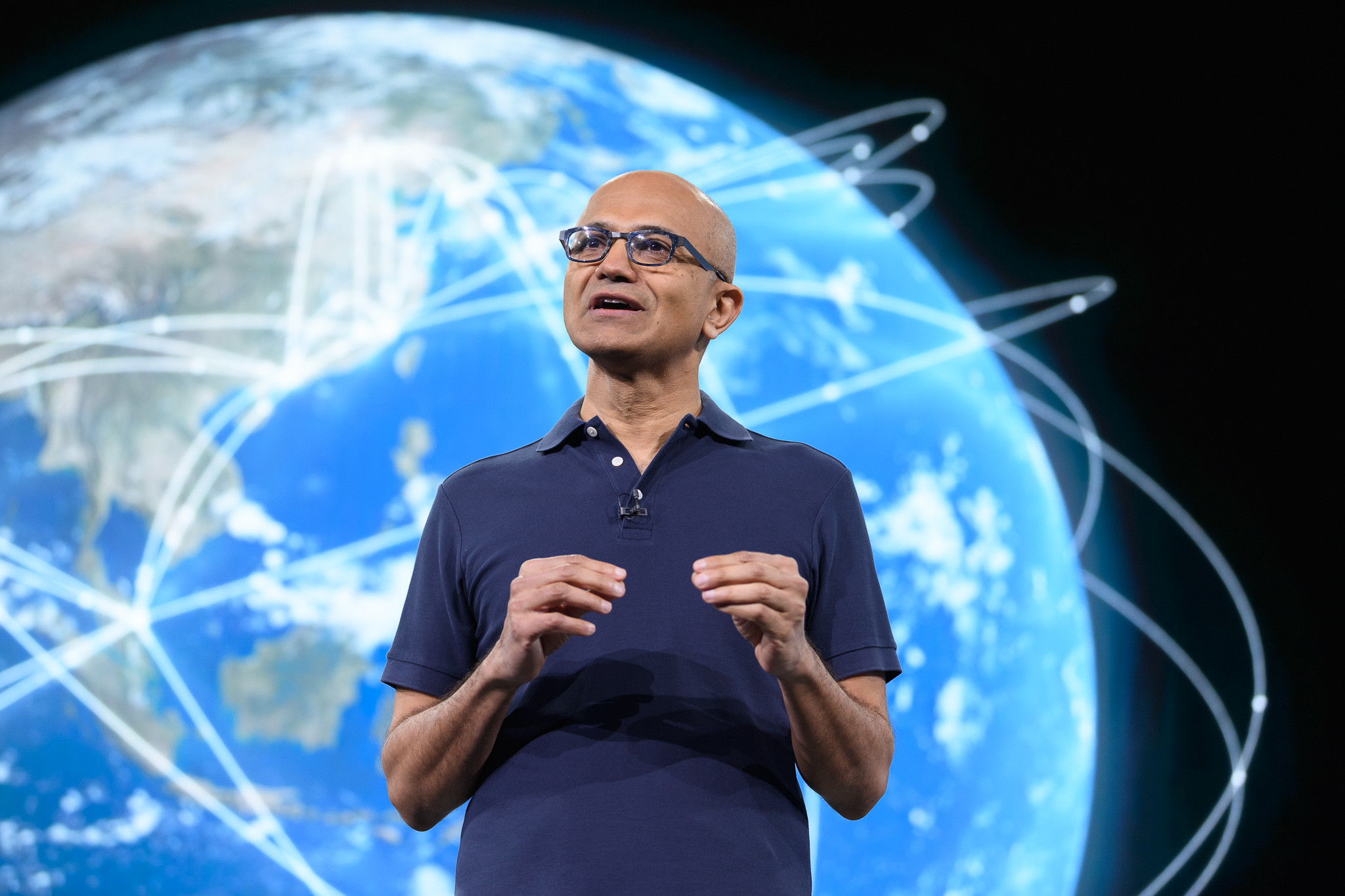
Satya Nadella is widely regarded as one of the most transformative technology leaders of the 21st century. Since assuming the role of CEO of Microsoft in February 2014, Nadella has led the company through a remarkable period of innovation, cultural transformation, and financial growth. His leadership style, focused on empathy, collaboration, and a growth mindset, has revitalized Microsoft, making it a global powerhouse in cloud computing, artificial intelligence, and enterprise solutions. Under Nadella, Microsoft has not only regained its position at the forefront of the tech industry but has also redefined the very concept of leadership in modern business.
Early Life and Education
Satya Narayana Nadella was born on August 19, 1967, in Hyderabad, India, into a Telugu-speaking family. From an early age, Nadella showed a keen interest in technology and science. He attended the Hyderabad Public School, Begumpet, where he excelled academically and developed a fascination with computers. He went on to pursue a Bachelor’s degree in Electrical Engineering from the Manipal Institute of Technology, graduating in 1988.
Nadella moved to the United States to further his education, earning a Master’s degree in Computer Science from the University of Wisconsin–Milwaukee. He later completed an MBA from the University of Chicago Booth School of Business, equipping him with both technical expertise and business acumen. This combination of education laid the foundation for his future success as a transformative leader in the tech industry.
Early Career and Joining Microsoft
Before joining Microsoft, Nadella briefly worked at Sun Microsystems, where he gained valuable experience in software engineering and technology management. In 1992, he joined Microsoft, starting a journey that would span more than two decades. Early in his career at Microsoft, Nadella held roles in the company’s enterprise and server divisions, where he demonstrated exceptional technical skill and leadership potential.
Through a combination of innovation, strategic thinking, and operational excellence, Nadella steadily rose through the ranks. His ability to understand both the technical and business aspects of the company made him a standout leader, paving the way for his eventual appointment as CEO.
Rise Through the Ranks
Nadella’s ascent at Microsoft was marked by significant achievements in various leadership roles. In 1999, he became Vice President of Microsoft’s bCentral small-business service, overseeing important initiatives that expanded Microsoft’s offerings for small enterprises. By 2001, he was appointed Corporate Vice President of Microsoft Business Solutions, where he led teams developing enterprise software solutions that contributed to the company’s growth.
From 2007 to 2011, Nadella served as Senior Vice President of Research and Development for the Online Services Division, focusing on cloud and online technologies. In 2011, he became President of the Server and Tools Business, one of Microsoft’s most critical divisions. Under his leadership, this division saw substantial growth, particularly in cloud infrastructure and enterprise software, setting the stage for his promotion to CEO in 2014.
Becoming Microsoft’s CEO
In February 2014, Satya Nadella was appointed the third CEO of Microsoft, succeeding Steve Ballmer. At the time, Microsoft faced several challenges, including slowing growth in its traditional Windows and Office businesses, intense competition from rivals like Apple and Google, and the growing importance of cloud and mobile technologies. Nadella’s appointment marked a new era for Microsoft, one focused on innovation, adaptability, and cultural transformation.
His vision for Microsoft was centered on the idea of making the company “cloud-first, mobile-first”, emphasizing cloud computing, cross-platform solutions, and subscription-based services. This shift allowed Microsoft to remain relevant in a rapidly changing technology landscape and laid the foundation for sustained growth in the years to come.
Transforming Microsoft’s Strategy
One of Nadella’s first strategic priorities as CEO was to accelerate Microsoft’s transition to cloud computing. He recognized early on that the future of enterprise technology was in cloud-based infrastructure, software-as-a-service solutions, and scalable computing platforms. Under his leadership, Microsoft Azure became one of the leading cloud platforms in the world, competing directly with Amazon Web Services and Google Cloud.
In addition to cloud computing, Nadella emphasized the importance of cross-platform development and mobility. Products like Office 365 and Microsoft Teams were redesigned to work seamlessly across devices, enabling businesses to adopt Microsoft solutions without being tied exclusively to Windows operating systems. This strategy not only broadened Microsoft’s customer base but also positioned the company as a leader in enterprise productivity and collaboration tools.
Cultural Transformation: Growth Mindset and Empathy
Perhaps Nadella’s most profound impact on Microsoft has been cultural. When he became CEO, the company had a competitive, siloed culture that discouraged collaboration. Nadella introduced a growth mindset philosophy, inspired by the work of psychologist Carol Dweck. This approach encouraged employees to embrace learning, experimentation, and continuous improvement rather than fearing failure.
Nadella also emphasized empathy as a core leadership value, arguing that understanding customers, employees, and partners is essential for innovation. He eliminated the company’s internal stack-ranking system, which fostered competition between employees, and replaced it with a culture of collaboration and shared purpose. This cultural transformation improved employee morale, boosted innovation, and strengthened Microsoft’s overall performance.
Strategic Acquisitions
Under Nadella’s leadership, Microsoft has made several strategic acquisitions that expanded its technological capabilities and market influence.
LinkedIn (2016)
Microsoft acquired LinkedIn for $26.2 billion, marking the company’s largest acquisition at the time. This purchase strengthened Microsoft’s position in professional networking and enterprise services, enabling seamless integration with Microsoft’s productivity tools.
GitHub (2018)
The acquisition of GitHub for $7.5 billion demonstrated Microsoft’s commitment to supporting the developer community and open-source software. GitHub has become an essential platform for developers worldwide, reinforcing Microsoft’s role in the global software ecosystem.
Activision Blizzard (2023)
In a transformative move, Microsoft acquired Activision Blizzard for $68.7 billion, significantly expanding its presence in gaming and interactive entertainment. This acquisition positions Microsoft as a major player in the gaming industry and a pioneer in immersive digital experiences.
Other acquisitions, including Nuance Communications and Minecraft developers, have diversified Microsoft’s offerings and strengthened its position in AI, gaming, and enterprise solutions.
Financial Success
Nadella’s strategic vision has delivered remarkable financial results for Microsoft. Since he became CEO, the company’s market capitalization has surpassed $2 trillion, making it one of the most valuable companies in the world. Revenue growth has been driven primarily by cloud computing, subscription services, and enterprise software.
Microsoft’s stock performance has mirrored this success, with significant gains reflecting investor confidence in Nadella’s leadership. The company’s ability to innovate, diversify its offerings, and remain competitive in the global technology market has solidified Microsoft’s reputation as a financial and strategic powerhouse.
Commitment to Ethics and Sustainability
Nadella has prioritized ethical leadership and corporate responsibility. Microsoft has set ambitious sustainability goals, including becoming carbon negative by 2030. The company has also focused on accessibility and inclusion, ensuring that its products and services are available to people with disabilities and underserved communities.
Nadella has emphasized the importance of ethical AI development, advocating for transparency, fairness, and accountability in technology. He has positioned Microsoft as a company that not only drives innovation but also prioritizes the social and ethical implications of its technologies.
Focus on Artificial Intelligence
Artificial intelligence (AI) has become a cornerstone of Microsoft’s strategy under Nadella. The company has invested heavily in AI research, infrastructure, and applications, integrating AI capabilities across its products and services. Microsoft’s AI initiatives, including AI-powered tools in Office 365, Azure AI services, and collaborative projects with leading AI organizations, demonstrate the company’s commitment to shaping the future of intelligent computing.
Nadella’s vision for AI emphasizes responsible and inclusive innovation, ensuring that AI benefits businesses, individuals, and society as a whole. By investing in AI, Microsoft is not only enhancing its products but also positioning itself as a leader in next-generation technology.
Leadership Philosophy
Satya Nadella’s leadership extends beyond strategy and innovation. He is known for his empathetic and inclusive leadership style, shaped in part by his personal experiences raising a son with special needs. Nadella believes that technology should empower people and organizations to achieve more, and he has instilled this philosophy throughout Microsoft.
His focus on collaboration, continuous learning, and ethical responsibility has influenced Microsoft’s culture, making it a company where innovation, purpose, and human values coexist. Nadella’s leadership demonstrates that success in the modern business world requires not only technical expertise but also emotional intelligence and a commitment to social responsibility.
Legacy and Global Impact
Under Nadella, Microsoft has achieved unprecedented success, not only in financial terms but also in innovation, culture, and global influence. The company has become a leader in cloud computing, AI, enterprise solutions, and gaming. Microsoft’s products and services touch billions of users worldwide, shaping how people work, communicate, and interact with technology.
Nadella’s legacy is characterized by visionary strategy, cultural transformation, ethical leadership, and technological innovation. He has shown that a company can achieve growth and profitability while maintaining a strong commitment to values, inclusion, and sustainability.
Personal Life
Satya Nadella lives in Bellevue, Washington, with his wife and children. He is known for his intellectual curiosity, humility, and interest in poetry and education. His personal experiences have informed his leadership philosophy, emphasizing empathy, growth, and the human impact of technology.
Conclusion
Satya Nadella’s journey from Hyderabad to the helm of Microsoft is a story of vision, perseverance, and transformative leadership. As CEO, he has guided Microsoft through a period of unprecedented growth, innovation, and cultural renewal. By embracing cloud computing, AI, strategic acquisitions, and a growth mindset culture, Nadella has positioned Microsoft for continued success in the ever-evolving technology landscape.
Beyond financial performance, Nadella’s legacy lies in his ability to combine technology, strategy, and empathy, proving that modern leadership requires both intelligence and humanity. His story is an inspiration for leaders across industries, demonstrating that true success is measured not only by profits but also by the positive impact on people, culture, and society.