


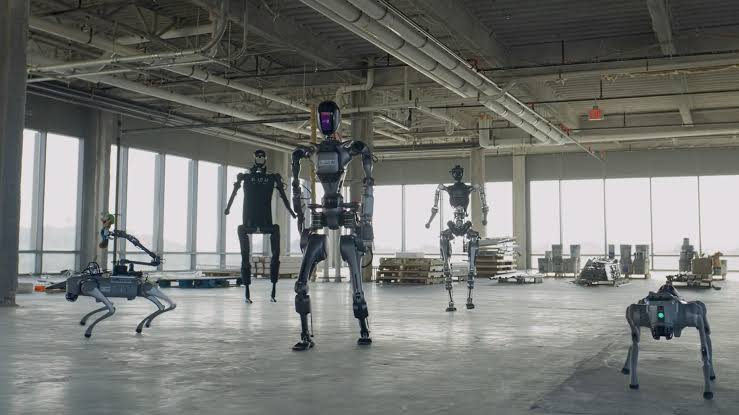
In recent years, robotics has moved beyond factory floors and entered the mainstream of innovation, reflecting dramatic shifts in technology, investment, and societal transformation. At the center of this evolution are robotics startups — agile, visionary companies that drive change faster than legacy incumbents. This article dives deeply into the latest developments, trends, and breakthroughs coming out of the global robotics startup ecosystem. We’ll explore how robotics startups are reshaping industries from healthcare to agriculture, how venture capital is fueling this growth, and what it all means for the future of work.
1. The Rise of Robotics Startups: A New Era of Innovation
Traditional robotics once conjured images of heavy industrial arms on assembly lines. Today’s robotics startups tell a different story — one in which robots assist in daily life, enhance human abilities, and address societal challenges like aging populations and labor shortages.
At the heart of this wave is a convergence of technologies: advanced sensors, lightweight materials, artificial intelligence, cloud connectivity, and machine learning. These technologies have lowered barriers to entry, enabling startups to innovate rapidly, test products, and scale operations with unprecedented speed.
Startups focused on service robots — robots designed to interact with humans or operate in dynamic environments — have seen remarkable progress. Unlike industrial robots that require controlled settings, service robots must navigate unpredictable real-world conditions. This has pushed startups to develop sophisticated perception systems and adaptive control algorithms that mimic human‑like awareness and responsiveness.
Examples of service applications include assistance for the elderly, autonomous delivery solutions, warehouse automation, and collaborative robots (“cobots”) that work alongside humans rather than replace them. These ventures are not only technical achievements but potentially transformative business models.
2. Funding Trends and Investment Landscape
Investment in robotics startups has surged in the past decade. Venture capital firms and corporate investors are funneling capital into companies that promise to redefine productivity and create new markets.
Investors are drawn to robotics for several reasons:
- Tangible Value Creation: Robotics can deliver measurable improvements in efficiency, safety, and cost reduction.
- Scalability: Once developed, robotics platforms can be deployed widely across industries.
- Cross‑Industry Potential: From logistics and agriculture to healthcare and hospitality, robotics startups can address large total addressable markets.
Venture capital rounds — including seed funding, Series A and beyond — have enabled startups to sustain long development cycles, hire top talent, and build prototype hardware that traditionally demanded heavy capital expenditure. Investors are also placing strategic bets on robotics startups as a hedge against future labor shortages and automation demands.
Despite periodic market fluctuations, the robotics sector remains a hotbed for investment. Some startups have achieved “unicorn” status — privately held companies valued at over a billion dollars — demonstrating the sector’s commercial potential. These successes also inspire early‑stage founders, contributing to a vibrant innovation ecosystem with incubators, accelerators, and robotics‑focused venture groups.
3. Breakthrough Technologies Powering Startup Success
Several emerging technologies are enabling robotics startups to push boundaries:
a. Artificial Intelligence and Machine Learning
Robots are only as smart as the software that guides them. AI and machine learning empower robots to perceive environments, plan actions, and adapt to new scenarios without explicit programming. Startups are using deep learning models to improve vision systems, predict human motion, and optimize navigation in complex spaces.
b. Advanced Sensors and Perception
The advent of compact, high‑resolution sensors — including LIDAR, stereo cameras, and force/torque sensors — gives robots a human‑like awareness of their surroundings. Startups integrate these sensors with real‑time processing to enable capabilities like obstacle avoidance, object recognition, and environment mapping.
c. Cloud Robotics
Cloud connectivity allows robots to share data, learn collectively, and benefit from centralized computing resources. This reduces the cost of onboard processing and accelerates development by enabling remote updates and continuous improvement.
d. Human–Robot Interaction
Designing robots that interact naturally with humans is a major focus for startups. Advances in speech recognition, gesture understanding, and intuitive interfaces help robots understand human intent and respond appropriately, creating safer and more effective human–robot collaboration.
e. Modular and Reconfigurable Hardware
Startups are building robots with modular components that can be easily adapted for different tasks. This flexibility reduces design costs and expands product versatility, making robotics solutions more accessible to smaller businesses.
4. Applications Driving the Robotics Startup Boom
Robotics startups are targeting a broad range of industries, each with unique challenges and opportunities.
a. Healthcare and Assisted Living
Healthcare robotics has become a major growth area. Startups are developing robotic assistants that help with physical therapy, surgical procedures, elder care, and hospital logistics. These solutions aim to reduce the burden on caregivers and improve patient outcomes.
Domestic robots that assist elderly or disabled individuals with daily tasks — such as mobility support or medication reminders — are also gaining traction as societies age.
b. Logistics and Warehouse Automation
The explosion of e‑commerce has accelerated demand for warehouse automation. Startups are introducing autonomous mobile robots (AMRs) that move goods, sort packages, and optimize storage workflows. These robots increase throughput and reduce labor costs, making operations more resilient.
Innovations include collaborative robots that work alongside human workers to perform tasks like picking, packing, and palletizing.
c. Agriculture and Farming
Agriculture robotics addresses labor shortages and sustainability. Startups are creating autonomous tractors, fruit‑picking robots, and drones that monitor crop health. These technologies improve yields while reducing the environmental footprint of farming operations.
d. Construction and Infrastructure
Construction robotics startups focus on tasks that are dangerous or repetitive, such as bricklaying, welding, and site inspection. By automating these functions, robots improve safety and speed up project timelines.
e. Environmental and Disaster Response
Robotics has powerful applications in monitoring environmental conditions and responding to disasters. Autonomous robots can assess hazardous areas, detect pollutants, and assist in search‑and‑rescue missions. Startups in this domain combine durable hardware with intelligent autonomy to operate in extreme environments.
f. Consumer Robotics
Startups are also exploring consumer robotics — personal assistants, home cleaning robots, and educational robots for children. While the consumer market has been challenging, advancements in affordability and usability are opening new opportunities.
5. Challenges Facing Robotics Startups
Despite rapid progress, robotics startups face notable obstacles:
a. High Development Costs
Building physical robots is expensive. Unlike purely software startups, robotics companies must design, prototype, test, and manufacture hardware — all of which require capital and expertise. Funding cycles must often sustain long periods before revenue is realized.
b. Complex Integration
Robotics involves integrating mechanical systems, electronics, software, and AI. Achieving seamless integration demands diverse engineering talent and rigorous testing.
c. Regulatory Hurdles
In sectors like healthcare and autonomous vehicles, robots must comply with strict safety and regulatory standards. Navigating this landscape can delay product launches and increase costs.
d. Market Adoption
Convincing customers to adopt robotic solutions — especially in traditional industries — requires clear demonstration of value. Startups must invest in education and sales processes to overcome skepticism.
e. Workforce Transition
As robots enter the workforce, debates about job displacement and reskilling intensify. Startups must address concerns about how automation affects employment and work with policymakers to support transition strategies.
6. Notable Robotics Startup Stories and Trends
While this article focuses on trends rather than specific companies, a few recurring themes emerge in the latest robotics startup news:
a. Convergence with AI
Robotics startups increasingly pair mechanical innovation with advanced AI capabilities, enabling robots to perform tasks once considered impossible without human supervision.
b. Sector Diversification
Rather than focusing solely on industrial robotics, many startups are targeting niche markets — from robotic bartenders that serve drinks to autonomous boats that monitor waterways.
c. Collaboration and Partnerships
Startups are partnering with larger technology companies, research institutions, and industry leaders to accelerate product development and gain market access.
d. Ethical and Responsible Robotics
As robotics becomes pervasive, ethical considerations — such as data privacy, safety standards, and job impacts — are shaping how startups develop and deploy solutions.
e. Global Innovation Hubs
While Silicon Valley remains a major center for robotics startups, innovation hubs have emerged worldwide — in Europe, East Asia, and the Middle East — reflecting a diversified global landscape.
7. The Future Outlook for Robotics Startups
As robotics technology continues to advance, the startup landscape is likely to see several emerging trends in the years ahead.
a. Smarter, More Autonomous Robots
Robots will become more intelligent and capable of higher‑level decision‑making. Advances in AI will allow robots to interpret complex environments, collaborate with humans more effectively, and adapt to new tasks without extensive reprogramming.
b. Democratization of Robotics
Startups are lowering the cost of entry for robotics platforms. As technology becomes more affordable, smaller businesses and even consumers will have access to advanced robotic solutions, expanding overall adoption.
c. Integration with Internet of Things (IoT)
Robots will increasingly operate as part of interconnected ecosystems, sharing data with other devices and contributing to smart environments — from smart factories to connected homes.
d. Increased Emphasis on Safety and Trust
As robots interact more closely with people, safety protocols, transparent behavior, and trustworthiness will be key competitive differentiators.
e. Expansion into New Domains
Robotics startups will push into sectors that are currently underserved, such as mental health support, advanced education tools, and personalized physical therapy.
8. Conclusion: Why Robotics Startups Matter
Robotics startups are more than just a technological phenomenon; they represent a shift in how we conceive of work, interaction, and problem‑solving. By combining AI, hardware innovation, and visionary entrepreneurship, these startups are developing solutions with the potential to enhance productivity, improve quality of life, and tackle some of society’s most pressing challenges.
In the world of robotics startup news, the pace of innovation shows no signs of slowing. New funding rounds, product launches, and strategic pivots continually reshape the narrative. While challenges remain — from funding constraints to regulatory complexities — the collective momentum of the robotics ecosystem points to a future in which robots are indispensable partners in human progress.
For entrepreneurs, investors, and technology observers alike, staying informed about robotics startup developments is not just about awareness of the latest gadgets or funding headlines — it’s about understanding the trajectory of a technology that will define industries and societies in the decades to come.