


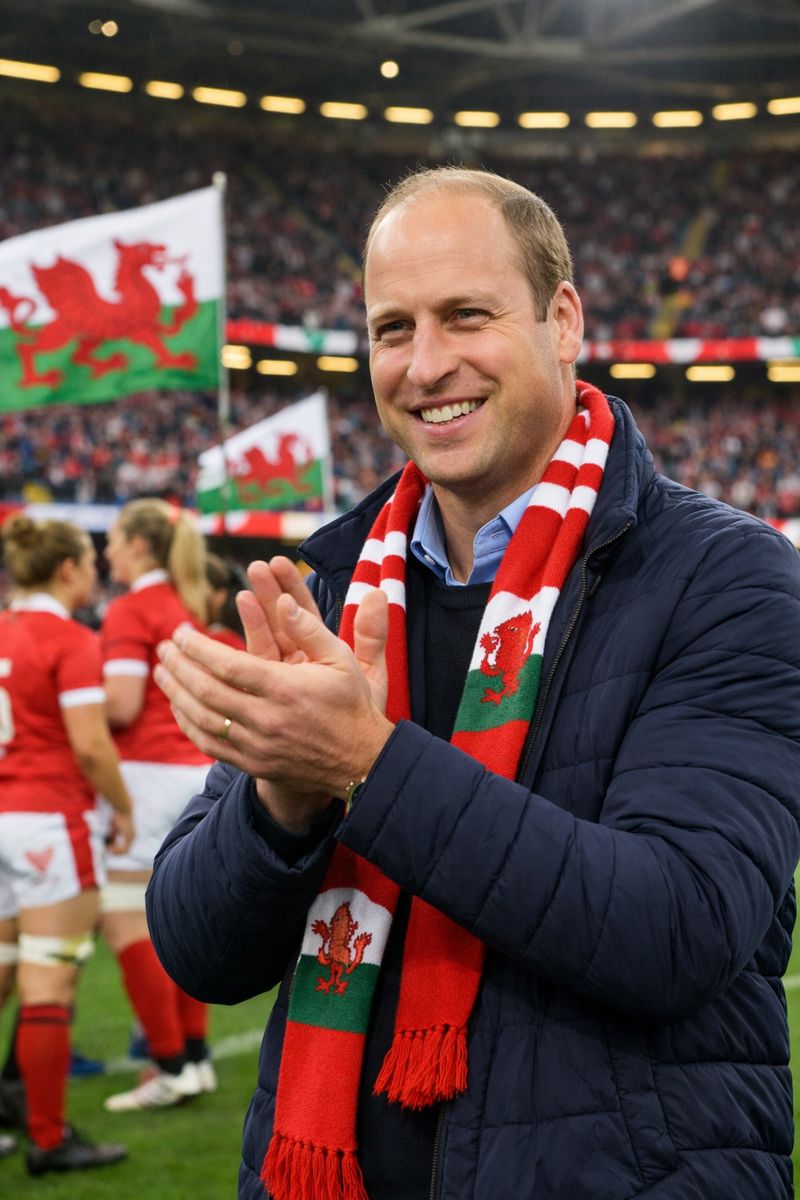
In August 2025, Prince William, the Prince of Wales and heir to the British throne, captured headlines and the hearts of many with a heartfelt message of support for the Wales women’s rugby team as they prepared to compete in the Rugby World Cup. What made the message particularly notable was not just its sporting encouragement, but the fact that William delivered part of it in Welsh — a gesture that reflects his growing connection with Wales, its culture, and its people.
As patron of the Welsh Rugby Union (WRU), the Prince of Wales has long had a ceremonial role in supporting the sport across Wales. Rugby is deeply embedded in the country’s national identity, and royal engagement with the sport reflects both tradition and modern public relations. William’s summer message — part showcase of his developing linguistic skills in Welsh and part genuine cheer for the women’s national side — highlighted how the monarchy can use sport as a bridge between tradition and contemporary public engagement.
A Message of Support, Pride, and Welsh Culture
Prince William’s message was issued during a family holiday, where he paused briefly to share a note of encouragement. In Welsh, he wrote words that translate to “Good luck Wales, go for it!” alongside an English-language greeting wishing the Wales women’s team success in their Rugby World Cup opener against Scotland.
This bilingual message was not merely symbolic. It highlighted William’s personal effort to engage with the Welsh language — something that has been noticed and appreciated by many in Wales, even if fluency is still a work in progress. His command of conversational Welsh has been gradually developing, with occasional phrases shared publicly during important Welsh national events such as St David’s Day, the country’s key cultural celebration.
The use of Welsh is significant because it reflects a broader aim: royal engagement with cultural identity. For many Welsh people, hearing the heir to the throne make even a simple effort to speak their language can feel like acknowledgement of their history and heritage, reinforcing that Wales is not merely a part of the United Kingdom but a nation with its own distinct culture. Rugby, in turn, is one of the most powerful cultural symbols of that identity.
Rugby: More Than a Game in Wales
Rugby occupies a special place in Welsh society. Across towns and valleys, the game is not just a sport but a tradition, a communal experience that unites families and generations. From grassroots club fixtures to international matches at iconic venues like the Principality Stadium in Cardiff, rugby is often described not just as a pastime but as part of the Welsh national character.
For the Prince of Wales to speak directly to this tradition — and in Welsh — carries both political and cultural weight. It’s a form of soft diplomacy that acknowledges the pride and passion tied to rugby in Wales, especially as national teams compete on the global stage. Supporting the women’s team in particular also reflects the growing stature and influence of women’s sports worldwide, underlining the inclusivity and diversity that modern athletics strive to represent.
William’s message came at a moment when women’s rugby was gaining unprecedented attention, with the Rugby World Cup becoming one of the most widely watched editions in history. The Welsh squad, under rising expectations and global interest, stood not just as competitors but as symbols of national aspiration. William’s words, though brief, helped shine an international spotlight on that effort.
Royal Patronage and Sporting Rivalries
William’s involvement with rugby is not confined to Wales alone. Throughout his life, he has embraced sport — both as a fan and as a figurehead. His wife, Catherine, Princess of Wales, is also deeply involved in rugby, but from a different angle: she is patron of the Rugby Football Union (RFU) in England. This divergence has led to playful sporting rivalries within the royal household, particularly during high-profile matches between England and Wales.
In March 2025, for example, the Prince and Princess of Wales attended the Six Nations match between Wales and England in Cardiff — a fixture that became a light-hearted symbol of their personal sportsmanship as much as a marker of professional responsibilities. While William supported the Welsh side in his role with the WRU, Catherine cheered for the English team — igniting a friendly competitive atmosphere that fans found endearing.
This dynamic illustrates the broader role of the royals in sport: they are both unifiers and representatives. Supporting national passions like rugby allows them to connect with communities, but the Windsor role in sporting patronage also mirrors the cultural diversity of the United Kingdom, where multiple national identities coexist under a shared monarchy.
Why the Message Matters Beyond Sport
At first glance, a royal message wishing a team luck might appear trivial. But when it comes from the heir to the British throne — especially in a language with deep national resonance — it carries both symbolism and substance.
The Welsh-language component is particularly noteworthy. While William is not undergoing formal full-time Welsh lessons, his effort to use the language shows a public commitment to respect and inclusion. For many in Wales, this isn’t just about learning new phrases; it’s about a royal recognition of their cultural identity and nationhood.
Moreover, by supporting the women’s rugby side, Prince William aligns with broader conversations about gender equity in sport. Women’s rugby has surged in visibility and popularity, and royal endorsement amplifies that trajectory. It showcases that elite support for women’s athletics is not merely a token gesture but part of a meaningful cultural shift that values competition and contribution across genders.
Finally, William’s message also ties into the monarchy’s role in contemporary British society. Royals often serve as symbolic anchors during celebratory and challenging moments alike. Whether wishing teams well, marking national holidays in local languages, or attending sporting events, these gestures reinforce continuity, unity, and cultural resonance across generations.
Reflections on Royal Engagement with Sport
Prince William’s Wales rugby message illustrates how sport and culture intersect under the public spotlight. It was more than a routine social media post — it was a public affirmation of national pride, cultural respect, and modern relevance for an ancient institution.
As patron of the Welsh Rugby Union and a figure recognized worldwide, William’s engagement with rugby goes beyond stately duty; it affirms the ongoing cultural significance of sport. His willingness to speak some Welsh, even imperfectly, reflects a monarchy that seeks connection with the people it represents — and that, in itself, has powerful meaning for many.
In an era where national identity and cultural respect are at the forefront of public dialogue, moments like these — simple, sincere, and supportive — reveal how influence can be wielded with grace, familiarity, and goodwill. Prince William’s message to the Wales women’s rugby team encapsulates all of these: sporting support, cultural acknowledgment, and a shared sense of national pride that unites fans across Wales and beyond.