


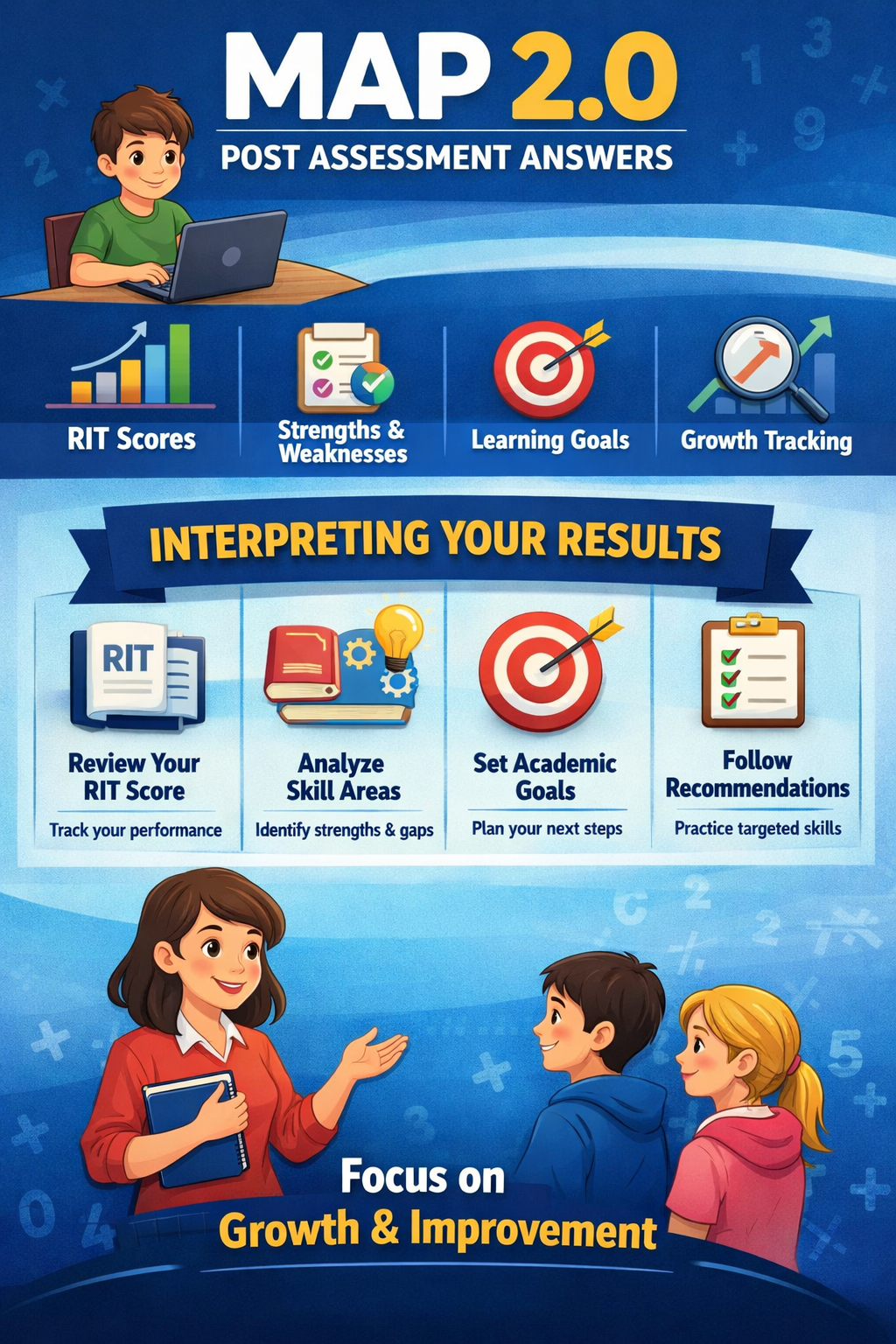
The MAP 2.0 (Measures of Academic Progress 2.0) assessment is a widely used adaptive testing system designed to measure student growth in subjects such as mathematics, reading, and language usage. After completing the MAP 2.0 assessment, students, parents, and educators often seek guidance regarding post-assessment results and answers to better understand performance and areas for improvement. This article serves as a comprehensive guide to understanding MAP 2.0 post-assessment answers and interpreting the results effectively.
What is MAP 2.0?
MAP 2.0 is an online, computer-adaptive assessment developed by NWEA (Northwest Evaluation Association). Unlike traditional tests, MAP 2.0 adapts to each student’s level of proficiency. The questions presented adjust in real-time based on the student’s responses. Correct answers lead to more challenging questions, while incorrect responses result in simpler questions. This system helps educators measure the academic growth of students over time rather than simply their proficiency at a single point.
Purpose of MAP 2.0
The main objectives of MAP 2.0 include:
- Tracking Student Growth: MAP 2.0 helps teachers track student growth over the academic year.
- Identifying Learning Gaps: Post-assessment analysis highlights areas where students need improvement.
- Informing Instruction: Teachers use MAP 2.0 results to plan lessons tailored to individual student needs.
- Setting Academic Goals: By reviewing post-assessment answers, students and parents can set realistic learning goals.
Understanding Post Assessment Answers
Once the MAP 2.0 assessment is completed, students receive a report detailing their performance. The post-assessment answers are not provided in the form of a traditional answer key but rather through score reports and growth charts. These reports include several components:
1. RIT Scores
The RIT (Rasch Unit) score is a key metric in MAP 2.0 results. It provides an objective measure of a student’s academic achievement, independent of grade level.
- Score Interpretation: Higher RIT scores indicate higher proficiency.
- Growth Monitoring: Comparing RIT scores from different testing periods allows educators to assess academic growth.
2. Goal Performance
The MAP post-assessment report shows how well a student performed relative to expected growth goals. It helps determine whether a student is on track to meet grade-level expectations.
3. Strengths and Weaknesses
Each post-assessment report breaks down areas of strength and areas needing improvement. For example, in mathematics, these areas might include:
- Algebra
- Geometry
- Data Analysis
- Number Operations
For reading, breakdowns may include:
- Vocabulary
- Comprehension
- Literary Text Analysis
- Informational Text Analysis
4. Recommended Learning Pathways
Based on the post-assessment results, MAP 2.0 often suggests learning pathways or activities to strengthen weaker areas. These recommendations serve as personalized learning guides for students.
How to Interpret MAP 2.0 Post Assessment Answers
Interpreting the MAP 2.0 post-assessment answers involves several steps:
Step 1: Review RIT Scores by Subject
Compare your current RIT scores with previous scores to see growth trends. Focus on both strengths and areas that show minimal improvement.
Step 2: Analyze Skill Areas
Identify specific skill areas where your scores are lower. For instance, if reading comprehension scores are lower than vocabulary scores, prioritize comprehension strategies in future learning.
Step 3: Set Goals Based on Data
Use your post-assessment answers to set SMART goals (Specific, Measurable, Achievable, Relevant, Time-bound). For example:
- Improve math geometry skills by 10 RIT points by the next assessment.
- Increase reading comprehension score by practicing one passage per day.
Step 4: Use Recommendations for Targeted Practice
MAP 2.0 provides targeted practice suggestions based on the assessment. Following these recommendations helps in addressing learning gaps efficiently.
Step 5: Monitor Ongoing Growth
MAP assessments are conducted multiple times per academic year. Continuously monitoring progress ensures students are improving and meeting set goals.
Common Questions About Post Assessment Answers
Q1: Can I get exact question answers from MAP 2.0?
MAP 2.0 does not provide a traditional answer key. The system adapts to student responses, making each test unique. Post-assessment answers are presented as scores and skill area feedback, rather than individual question answers.
Q2: How accurate are MAP 2.0 post-assessment scores?
MAP 2.0 is highly accurate because it uses a computer-adaptive system. The RIT scores provide reliable indicators of student proficiency and growth.
Q3: How should parents use MAP 2.0 results?
Parents should focus on understanding overall trends rather than individual questions. Reviewing growth, strengths, and weaknesses helps support children at home.
Q4: How do teachers use post-assessment answers?
Teachers use MAP 2.0 post-assessment answers to:
- Identify students needing extra support
- Plan targeted interventions
- Differentiate instruction in the classroom
Strategies to Improve Post Assessment Performance
Improving post-assessment results requires focused strategies. Some effective methods include:
- Regular Practice: Consistent practice in weak areas leads to gradual improvement.
- Targeted Learning Materials: Use learning platforms aligned with MAP 2.0 skill areas.
- Interactive Learning: Engage in activities that challenge reasoning, comprehension, and problem-solving skills.
- Feedback Analysis: Regularly review post-assessment feedback to adjust study strategies.
- Goal Setting: Set short-term, achievable targets for each assessment cycle.
Benefits of Understanding MAP 2.0 Post Assessment Answers
Understanding MAP 2.0 post-assessment answers provides multiple benefits:
- Personalized Learning: Students can focus on areas that need improvement.
- Data-Driven Instruction: Teachers can provide instruction based on real performance metrics.
- Academic Growth Tracking: Students can see tangible growth over time.
- Motivation: Students can celebrate improvements, motivating further learning.
- Preparation for Future Assessments: By understanding trends, students can better prepare for future MAP tests.
Tips for Students
- Take time to understand your RIT scores and growth metrics.
- Don’t focus on individual questions; focus on learning from mistakes.
- Use recommended learning pathways as a guide, not a limitation.
- Track your progress between assessment periods.
- Discuss your results with teachers and parents to create a growth plan.
Conclusion
The MAP 2.0 post-assessment answers provide a detailed understanding of student performance, growth, and learning needs. While the system does not provide direct question answers, it equips students, parents, and educators with actionable insights through RIT scores, skill breakdowns, and personalized recommendations. By analyzing these results effectively, students can target weak areas, set achievable goals, and track their academic growth. For educators and parents, these insights are essential for creating supportive learning environments that help students achieve their full potential.
MAP 2.0 post-assessment answers are more than just numbers—they are tools for growth. Proper interpretation and application of these insights empower students to progress academically and develop a lifelong love for learning.