


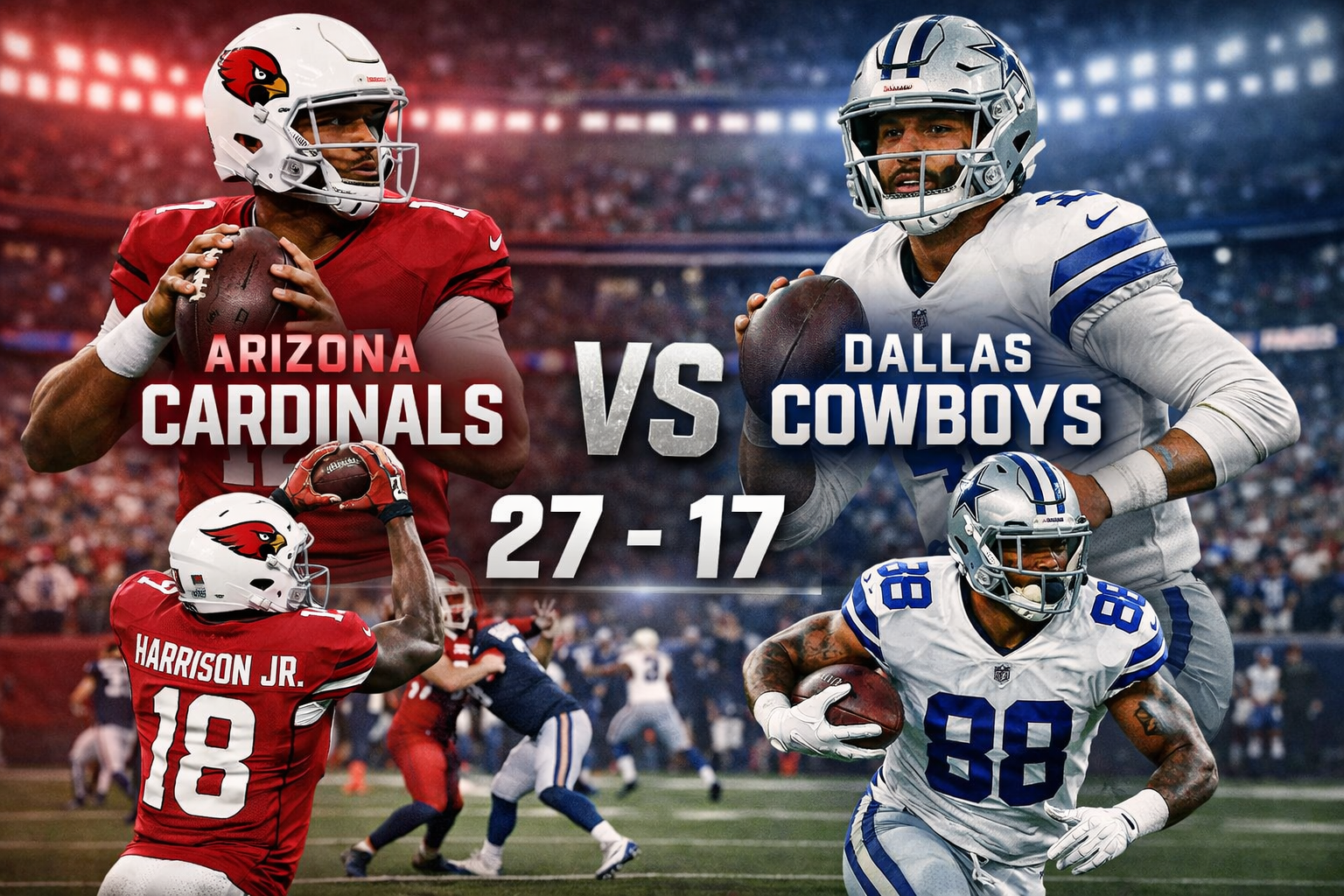
The rivalry between the Arizona Cardinals and Dallas Cowboys is one of the most intriguing matchups in the NFL’s modern era. These two teams have met numerous times over the years, producing memorable games with standout performances and intense competition. While the Cowboys historically have had the edge in the all‑time series, recent meetings have shown the Cardinals capable of matching their firepower and capitalizing on key opportunities.
This article examines their latest significant matchup, highlighting performance statistics, player achievements, strategic battles, and what the numbers tell us about each team’s strengths and weaknesses.
Setting the Stage: The Week 9 Clash
When the Arizona Cardinals traveled to face the Dallas Cowboys in Week 9 of the NFL season, there was significant buzz surrounding both teams. The Cowboys entered the game with a 3–4–1 record, hoping to build momentum in the NFC playoff race. Meanwhile, the Cardinals were fighting to regain confidence after a string of challenging performances.
This matchup wasn’t just another regular‑season game — it was a test of resilience and execution for both franchises. The Cardinals, led by Jacoby Brissett in place of injured quarterback Kyler Murray, were determined to snap their slide and gain respect on the road. The Cowboys, with quarterback Dak Prescott at the helm, aimed to assert their offensive dominance and avoid falling deeper in the standings.
Final Score Breakdown
In a surprising result, the Arizona Cardinals defeated the Dallas Cowboys 27–17. While the Cowboys had been averaging a higher offensive output, the Cardinals’ defense and opportunistic playcalling helped swing the game in their favor. This victory marked a meaningful shift in momentum for Arizona and exposed several key statistical takeaways.
Now, let’s break down the most important player performances and how each team contributed to this result.
Arizona Cardinals — Leaders & Key Stats
Quarterback Play: Jacoby Brissett
With Kyler Murray sidelined due to injury, Jacoby Brissett took over under center. This was one of his most efficient games as a starter:
- Completions/Attempts: 21/31
- Passing Yards: ~260
- Passing Touchdowns: 2
- Rushing Touchdown: 1
Brissett’s stat line showed calm decision‑making and the ability to make big plays when needed. His two passing touchdowns and rushing score were crucial in maintaining control throughout the game. His performance demonstrated veteran experience and the capability to manage pressure against a strong Cowboys defense.
Receiving Corps
One of the biggest storylines from this game was the breakout night from a key Cardinals receiver:
- Marvin Harrison Jr. was a focal point of the Arizona passing attack, hauling in 7 receptions for 96 yards and a touchdown. Not only did Harrison show precise route running and strong hands, but he was also productive in key red‑zone situations.
Another contributor was:
- Tight End Trey McBride, who recorded 5 receptions for 55 yards and a touchdown, proving himself a reliable target in short and intermediate zones. McBride’s performance showcased how Arizona leveraged mismatches against Dallas’ linebacker coverage.
It’s also worth noting the Cardinals running game chipped in valuable yardage, giving Brissett time and balance for his passing sequences.
Defense & Turnovers
The Cardinals defense played with intensity and disruption:
- Forced turnovers at pivotal moments
- Multiple sacks on Prescott
- Key red‑zone defensive stops
This defensive performance was critical. Limiting a usually potent Dallas offense while generating pressure allowed Arizona to protect their lead and control field position.
Dallas Cowboys — Standouts & Challenges
Quarterback: Dak Prescott
Dak Prescott is known for his knack of leading big drives and staying poised under pressure, and this game was no different statistically:
- Completions/Attempts: 24/39
- Passing Yards: ~250
- Touchdown: 1
- Interception: 1
- Passer Rating: Below his usual standard
While Prescott moved the ball effectively between the 20s, costly mistakes — including an interception — and stalled red‑zone drives limited their scoring output.
Receiving Leaders
The Cowboys’ receiving core was active but not explosive:
- CeeDee Lamb: 7 receptions for ~85 yards
- George Pickens: 6 receptions for ~79 yards
Both receivers showcased reliable hands and the ability to generate yardage after the catch. However, without consistent playmaking to shift momentum, Dallas struggled to find rhythm in key moments.
Rushing Attack
Running back involvement was solid but may have lacked enough explosive plays to tilt the game:
- Javonte Williams carried the ball and contributed in the receiving game, providing yardage and securing work in both facets of the offense.
Despite decent numbers, the Cowboys rush attack couldn’t consistently control possession or keep Brissett and the Cardinals offense off the field as effectively as needed.
Special Teams & Turnovers
One unique scoring play for Dallas came via a blocked punt returned for a touchdown. While this added points to the board, it ultimately wasn’t enough to offset the turnovers and defensive stops given up throughout the evening.
Statistical Themes & Comparison
Now, let’s examine some broader statistical comparisons that paint the basketball of this matchup:
Team Yardage
- Arizona Total Yards: ~340
- Dallas Total Yards: ~333
This nearly even total yardage indicates a competitive affair in terms of offensive production — but it also highlights how Arizona’s efficiency and situational execution made the difference.
Time of Possession
The Cardinals held a slight edge in time of possession, which translated to more opportunities to sustain drives and wear down a typically aggressive Dallas defense.
Third Down & Red Zone Efficiency
Arizona capitalized when needed, converting crucial third downs and taking advantage of their red zone chances. In contrast, the Cowboys stalled or settled for field goals in multiple key situations.
Game Dynamics & Turning Points
A closer inspection of the play‑by‑play reveals several moments that influenced the flow of the game:
Early Momentum
Arizona struck first with a field goal, forcing Dallas to play catch‑up. Early points can influence playcalling decisions and force teams to react rather than dictate.
Score Sequence
Arizona’s combination of passing and rushing touchdowns allowed them to balance unpredictability. Meanwhile, the Cowboys’ lone offensive touchdown came from their passing game and was supplemented by a special teams score — a sign their offense was unable to consistently convert drives into touchdowns.
Defense Making Big Plays
Both teams had impactful defensive moments, but Arizona’s ability to force turnovers and make stops at critical junctures ultimately shifted the balance in their favor.
Player Impacts Beyond the Box Score
While statistics capture on‑paper performance, some impacts are felt more subtly:
- Leadership & Experience: Brissett’s calm execution helped mitigate pressure situations and reduced errors even with limited game planning.
- Receiver Effort: Catching contested balls, sustaining blocks in the run game, and adjusting to defensive coverages are less quantifiable but greatly influence drive success.
- Defensive Pursuit: On Dallas’ side, missed tackles and route discipline allowed Arizona receivers opportunities downfield.
How This Match Shapes Future Narratives
Here are some key narrative takeaways following this matchup:
Arizona Cardinals
- Confidence Boost: Snapping a losing streak with a strong offensive and defensive balance provides momentum for future games.
- Quarterback Depth: Brissett proved capable of leading the team — resilience that matters over a long season.
- Emerging Stars: Harrison Jr. and McBride reinforced their roles as top targets and red‑zone threats.
Dallas Cowboys
- Execution Under Scrutiny: While offensive numbers weren’t poor, situational execution in the red zone and turnover avoidance will be focal points for coaching staff.
- Receiver Production: Lamb and Pickens remain reliable weapons, but the offense needs consistent scoring traction against top defenses.
- Roster Adjustments: Defensive performance and depth positions will be key topics as the Cowboys seek to adjust their strategy.
Looking Ahead: What This Tells Us
Future matches between these teams promise competitive narratives and highlight NFL football’s unpredictable nature. Whether it’s reshaped offensive strategies, defensive adjustments, or evolving player roles, the statistical footprint of this game will influence how both teams prepare moving forward.
Closing Thoughts
The Arizona Cardinals vs Dallas Cowboys matchup was more than a single game — it was a statistical and strategic study in how football games are won beyond raw yardage. From quarterback leadership to red‑zone execution, and from defensive disruption to receiver reliability, this contest offered deep insights into both teams’ identities.
For fans, analysts, and casual observers alike, this matchup will be remembered as one where efficiency, opportunism, and execution trumped pure statistical accumulation. Ultimately, the Cardinals’ 27–17 victory highlighted football’s beauty: a game where critical plays — not just big numbers — define the winner.