
Introduction
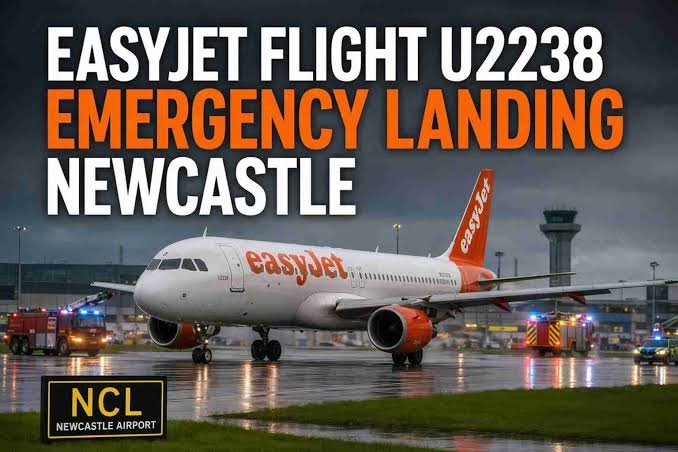
Aviation incidents often make headlines because they involve hundreds of passengers in a confined environment at high altitude. One such widely discussed event is the EasyJet Flight U2238 emergency landing in Newcastle, which drew attention from aviation watchers, passengers, and media outlets across the UK and Europe.
Although the phrase “emergency landing” can sound alarming, many such events are handled safely and efficiently due to strict aviation safety protocols. In this article, we will explore in detail what happened on EasyJet Flight U2238, why the aircraft diverted to Newcastle, how the crew responded, and what this incident tells us about modern airline safety systems.
Overview of the Flight
EasyJet Flight U2238 was operating a scheduled commercial service from Copenhagen Airport (Denmark) to Manchester Airport (United Kingdom). The flight was operated by an Airbus A320 family aircraft, a common short-haul jet used widely across Europe.
Onboard were approximately 178 passengers and crew members, all expecting a routine flight across the North Sea. However, the situation changed mid-flight when an unexpected medical emergency developed in the cabin.
What Happened Mid-Flight
During cruise altitude over the North Sea, a passenger onboard became seriously unwell. Cabin crew immediately responded, providing first aid and assessing the situation.
At the same time, communication was established with the flight deck. The pilots were informed that the passenger required urgent medical attention that could not be safely managed in the air for the remainder of the journey.
As a result, the flight crew made the decision to declare an emergency and divert the aircraft.
Reports indicate that the crew followed standard procedures, which include:
- Assessing passenger condition with cabin crew input
- Requesting medical assistance if available onboard
- Contacting ground-based medical support systems
- Coordinating with air traffic control for diversion options
This structured response ensured that the situation was handled calmly and efficiently.
Why Newcastle Was Chosen
Instead of continuing to Manchester, the aircraft diverted to Newcastle Airport, which is a fully equipped international airport capable of handling emergency landings.
Several important factors influenced this decision:
1. Proximity
Newcastle was one of the nearest suitable airports along the aircraft’s flight path at the time of the emergency.
2. Airport Capability
The airport has:
- Long runways suitable for Airbus A320 operations
- 24-hour emergency response services
- Medical and paramedic teams on standby
3. Operational Safety
Air traffic control coordination made Newcastle the safest and fastest option for landing.
In aviation, “closest” is not always the only factor. The priority is always the safest and most operationally suitable airport, especially during medical emergencies.
Emergency Declaration in the Air
During the incident, the flight reportedly declared a general emergency (commonly transponder code 7700 in aviation terms). This signals to air traffic control that the aircraft requires immediate priority handling.
Once declared:
- Air traffic control cleared airspace for direct routing
- Emergency services were alerted in advance
- Runway and medical teams were prepared for landing
This ensured that when the aircraft landed, assistance was already in place.
Landing at Newcastle Airport
The aircraft successfully landed at Newcastle Airport without incident. Emergency vehicles, including paramedics, were waiting on the runway.
Once on the ground:
- The affected passenger received immediate medical attention
- The individual was transferred to hospital for further treatment
- The remaining passengers were kept onboard briefly during coordination
After necessary checks and refuelling, the aircraft later continued its journey to Manchester in some reports.
Passenger Experience During the Event
For passengers onboard, such situations can feel uncertain, even if the outcome is safe.
Typical experiences reported in similar diversions include:
- Announcement from the captain explaining the diversion
- Slight change in cabin atmosphere due to seriousness of situation
- Observation of emergency vehicles upon landing
- Delay before continuation of the flight
However, cabin crew are trained to maintain calm communication and reassure passengers throughout the process.
Why Medical Emergencies Cause Diversions
Medical issues are one of the most common reasons for in-flight emergency landings. Aircraft cabins are not full medical facilities, and treatment options are limited.
Common reasons for diversion include:
- Heart-related issues
- Severe illness or sudden medical deterioration
- Loss of consciousness
- Allergic reactions or breathing difficulties
In such cases, pilots prioritize landing as soon as a safe airport is available.
How Airlines Handle Such Emergencies
Modern airlines like EasyJet follow strict safety systems designed for exactly these situations.
Key steps include:
1. Cabin Crew Response
Crew members are trained in first aid and emergency response.
2. Medical Support on Ground
Many airlines have access to ground-based medical consultation services during flights.
3. Pilot Decision-Making
The captain ultimately decides the diversion airport based on safety and operational feasibility.
4. Emergency Coordination
Air traffic control and airport emergency services are informed instantly to prepare for landing.
This structured chain of communication ensures that even unexpected situations are controlled and safe.
Was This a Dangerous Situation?
Despite the use of the term “emergency landing,” there is no evidence that the flight was in immediate structural danger.
Instead, this type of incident is classified as:
- A precautionary medical diversion
- A safety-first operational decision
Such diversions are routine in aviation safety systems and are often successful in preventing worse outcomes.
Impact on Aviation Operations
Events like this can temporarily affect airport traffic, including:
- Minor delays for other incoming flights
- Air traffic holding patterns
- Short-term runway prioritization
However, airports like Newcastle are fully prepared to manage such situations without major disruption.
Conclusion
The EasyJet Flight U2238 emergency landing in Newcastle is a clear example of aviation safety working as intended. A mid-flight medical emergency required immediate action, and the crew made a rapid, professional decision to divert the aircraft to the nearest suitable airport.
The outcome was safe:
- The aircraft landed successfully
- Medical assistance was provided immediately
- The situation was resolved without escalation
Rather than a crisis, the incident highlights the effectiveness of modern aviation training, coordination, and emergency preparedness systems.
