
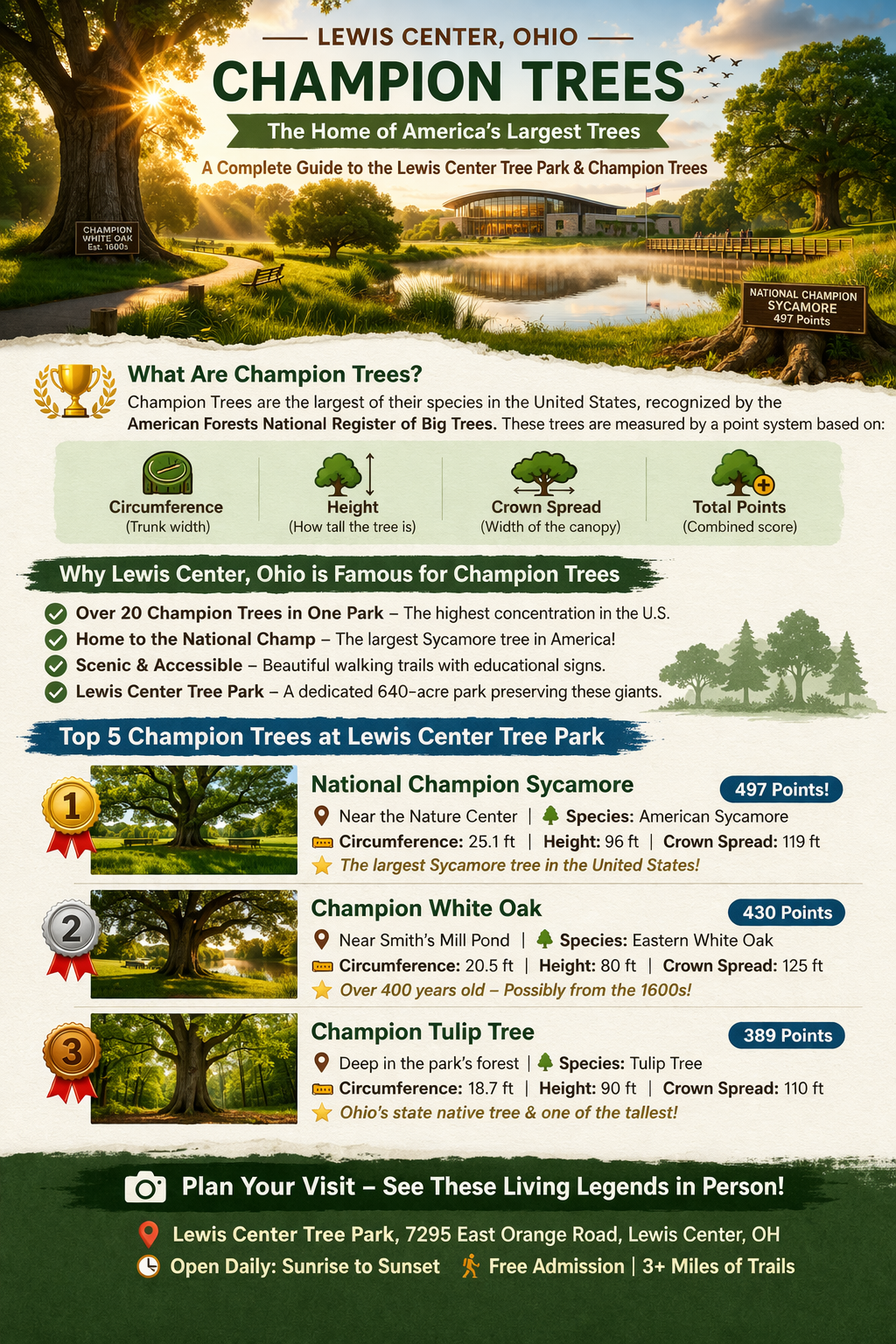
Lewis Center, Ohio — a growing, vibrant community north of Columbus — is known for its thriving neighborhoods, excellent schools, and expanding economy. But beyond development and suburban growth, one of the region’s most fascinating and underappreciated treasures lies quietly among its parks, streets, and greenways: champion trees.
Champion trees are the largest known individuals of their species in a region. They are measured, tracked, and celebrated for their age, size, and ecological value. In Lewis Center, a mix of native and planted species have reached remarkable proportions — standing tall as living monuments to decades (and sometimes centuries) of local history.
This article explores the importance of champion trees, their presence in Lewis Center, how residents can recognize and appreciate them, and why they matter to the community’s future.
What Are Champion Trees? Understanding the Concept
Champion trees are not just old or tall trees — they are officially recognized as the biggest of their kind within a defined geographic area. The factors that determine a champion include:
- Trunk circumference measured at a standard height above the ground.
- Overall height from base to tip.
- Crown spread, the width of the tree’s canopy.
- An aggregate score that combines all three measurements to determine the largest specimen.
This system allows communities like Lewis Center to identify and honor trees that have grown exceptionally well over decades of Ohio’s changing seasons.
Champion tree programs often encourage:
- Conservation awareness
- Ecological education
- Tree tracking and documentation
- Community engagement in tree preservation
Champion trees are local icons — natural heritage that connects people to the land’s biological history long before subdivisions and shopping centers were built.
The Natural Landscape of Central Ohio
Before we look at specific champion trees in Lewis Center, it helps to understand the region’s natural environment.
Central Ohio sits at the edge of the Eastern Deciduous Forest, a rich biome once dominated by oak, hickory, maple, ash, tulip tree, and other hardwood species. Prairie grasslands also existed, created by Native American land management and natural fire regimes.
With European settlement and agricultural development, much of this forest was cleared. Yet many large trees remained — especially in protected hollows, along streams, and within isolated woodlots. Today, green corridors and parks preserve remnants of this original landscape.
Champion trees in Lewis Center stand as living witnesses to:
- Pre‑settlement forests
- Agricultural transformation
- Urban and suburban expansion
- Modern conservation efforts
Each giant tree tells a story of resilience, climate adaptation, and natural endurance.
Champion Tree Species Found in Lewis Center
Lewis Center plays host to multiple species that have produced champion individuals. While exact measurements can vary over time due to growth, weather, and environmental changes, some of the most notable species include:
1. American Sycamore
The American sycamore is unmistakable — with mottled white, gray, and green bark and massive limbs that stretch skyward. Sycamores are among the fastest‑growing native hardwoods and often reach impressive girths.
In Lewis Center, sycamores along lowland stream corridors have produced some of the largest trunk circumferences recorded in the county.
2. Pin Oak
Distinguished by its pyramidal shape and deep lobed leaves, the pin oak is a common Ohio native. Pin oaks that have avoided early logging and development have grown into significant specimens, particularly in older parklands.
3. Sugar Maple
Known for brilliant autumn foliage, sugar maples grow slowly but steadily over decades. A champion sugar maple stands as a testament to longevity and sustained health, offering deep shade and seasonal beauty.
4. Shagbark Hickory
With peeling, textured bark and edible nuts, shagbark hickories are iconic in Ohio forests. Champion shagbark hickories in Lewis Center stand as reminders of the dense upland forests that once dominated the region.
5. White Oak
The white oak is often considered Ohio’s signature tree. Long‑lived and majestic, champion white oaks in Lewis Center have witnessed generations of local change. They provide vital habitat for wildlife and unparalleled canopy presence.
These species — along with others such as red oak, black walnut, and tulip tree — represent some of the most significant botanical giants in the area.
Where Champion Trees Thrive in Lewis Center
Champion trees are often found in areas where soil, water, and land use conditions favor long‑term growth. In Lewis Center, these include:
1. Community Parks and Preserves
Public parks often protect older woodlands that might otherwise be cleared. In several parks, mature forest patches shelter champion trees that exceed the size of surrounding plantings.
2. Greenway Corridors
Riparian greenways — natural buffers along streams and rivers — offer rich, undisturbed soil and consistent moisture. These conditions support robust tree growth, making them ideal places for champion specimens.
3. Mature Residential Neighborhoods
Some older subdivisions include large yard trees planted decades ago, long before rapid development. These trees have thrived in protected spaces, sometimes becoming local champions.
4. School Grounds and Institutional Landscapes
Schools, colleges, and civic spaces often preserve large trees as part of their campus identity. These can surprise residents as unofficial champion specimens — local legends in their own right.
Why Champion Trees Matter
Champion trees are more than just big — they are biologically and culturally significant. Here’s why they matter:
Environmental Benefits
Champion trees provide outstanding ecosystem services, including:
- Carbon storage — large trees store significant amounts of carbon over their lifetimes.
- Air purification — leaves filter pollutants, improving air quality for residents.
- Temperature regulation — expansive canopies provide shade and cool surrounding areas.
- Soil stabilization — deep roots hold soil in place, protecting watersheds and reducing erosion.
Biodiversity Support
Big, old trees offer habitat for birds, mammals, insects, fungi, and epiphytic plants. Hollow trunks and peeling bark provide nesting sites, while acorns and seeds sustain wildlife through seasons.
Cultural Heritage
Champion trees bear witness to history:
- They stood as Native American communities lived, hunted, and traveled these lands.
- They survived agricultural conversion and frontier settlement.
- They watched the transformation to suburban and community life in Lewis Center.
Local generations grow up with these trees as landmarks, meeting spots, and symbols of continuity.
Educational Value
Students and nature enthusiasts learn about ecology, dendrology (tree science), and conservation through champion tree programs. Measuring and recording data connects people to nature in hands‑on ways.
Protecting Champion Trees for the Future
Preserving champion trees requires community awareness and intentional care.
1. Proper Tree Care
Champion trees thrive when given respectful treatment:
- Avoid soil compaction around roots from heavy equipment
- Mulch properly to maintain moisture
- Prune dead or hazardous limbs safely
- Protect from construction damage
2. Land Conservation
Saving green spaces, forest patches, and riparian corridors ensures that champion trees remain undisturbed for decades to come.
3. Community Awareness Initiatives
Workshops, signage, and local education can help residents identify and appreciate these natural treasures. When people understand value, they are more likely to protect it.
4. Champion Tree Programs
Local tree societies and environmental groups often keep records, nominate champions, and monitor tree health. Community involvement through volunteerism creates stewardship and pride.
Stories of Champion Trees in Lewis Center
Every champion tree has a story — some passed down through neighbors, others discovered through measurement and admiration.
The Sycamore by the Creek
One of the largest sycamores in the area stands along a gentle creekbank. Its massive trunk measures well beyond typical sizes, creating a hollow base that local children once used as a play nook. Generations recall picnics under its umbrella shade.
The White Oak at the Schoolyard
An expansive white oak on school grounds has deep roots in community memory. Teachers recall class outdoor lessons under its canopy, and every year students gather at its base during autumn leaf season.
The Hickory Sentinel
In a residential greenway, a shagbark hickory — named the Hickory Sentinel by neighbors — towers above smaller plantings. Its bark peels like textured sculpture, and in autumn its nuts feed squirrels and blue jays alike.
These stories illustrate the emotional resonance that champion trees bring to everyday life.
How Residents Can Find Champion Trees
Identifying champion trees involves both observation and measurement. Here are simple steps to recognize significant trees:
Look for Unusual Size
If a tree seems significantly larger than its neighbors, it may be a local champion candidate.
Measure Trunk and Canopy
Volunteers can use tape measures and basic tools to record circumference and crown spread — community programs often assist with standard methods.
Compare Species Growth Patterns
Some species naturally grow bigger, so comparing like species helps identify true champions.
Document with Photos
Photographing trees over seasons helps track health, growth patterns, and seasonal beauty.
Champion Trees and Community Identity
Champion trees contribute to a sense of place. They are landmarks that:
- Define neighborhood character
- Inspire artistic expression
- Enhance civic pride
- Encourage environmental stewardship
Many residents remember a favorite tree from childhood — climbing its branches, carving initials (hopefully with permission), or watching leaves fall in swirling patterns.
Champion trees create continuity between past generations and present life in Lewis Center.
Conclusion – The Living Heritage of Lewis Center
Champion trees in Lewis Center are more than biological records — they are living history, ecological powerhouses, and community treasures. They remind us that growth isn’t only about expansion and development: it is also about patience, resilience, and connection to the natural world.
Whether you’re a longtime resident or a newcomer exploring local parks, take time to notice the giants among the greenery. Appreciate their shade, respect their age, and engage with community efforts to protect them.
In an era of rapid change, champion trees stand as anchors — rooted deeply in soil, branching toward the sky, and linking past, present, and future.
