
Introduction
In today’s rapidly evolving digital world, the integration of advanced technologies is reshaping industries at an unprecedented pace. One such emerging concept is Facebim, a term that blends facial recognition technology with Building Information Modeling (BIM). While both technologies have independently revolutionized their respective fields, their convergence introduces a powerful synergy that promises smarter buildings, enhanced security, and more efficient facility management.
Facebim is not just a buzzword—it represents a forward-thinking approach to combining identity verification with digital infrastructure. This article explores the concept of Facebim in depth, including its definition, working mechanisms, applications, benefits, challenges, and future potential.
What is Facebim?
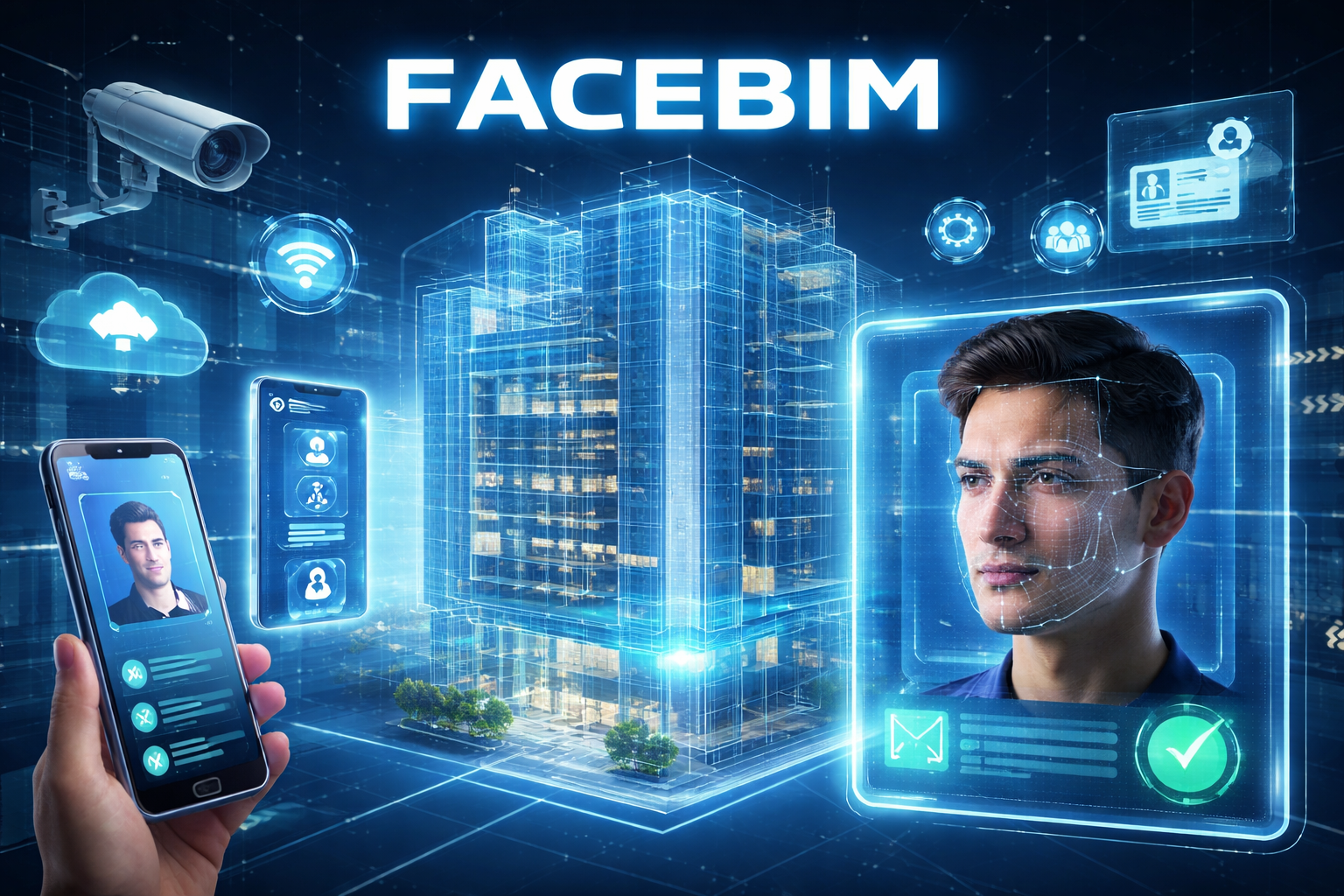
Facebim refers to the integration of facial recognition systems with Building Information Modeling (BIM) platforms. BIM is a digital representation of physical and functional characteristics of a building, while facial recognition technology uses biometric data to identify or verify individuals based on their facial features.
By merging these technologies, Facebim creates an intelligent ecosystem where buildings can “recognize” individuals and respond accordingly. For example, a smart office building using Facebim can automatically grant access to authorized personnel, adjust lighting and temperature preferences, and even track occupancy in real-time.
Understanding the Core Technologies
1. Facial Recognition Technology
Facial recognition is a biometric system that captures and analyzes facial features such as:
- Distance between eyes
- Shape of cheekbones
- Jawline structure
- Skin texture patterns
These features are converted into a mathematical representation called a faceprint, which is then compared against a database for identification or verification.
2. Building Information Modeling (BIM)
BIM is widely used in architecture, engineering, and construction (AEC) industries. It provides a 3D digital model of a building that includes:
- Structural details
- Electrical systems
- Plumbing layouts
- HVAC systems
- Spatial relationships
BIM is not just a design tool—it supports the entire lifecycle of a building, from construction to operation and maintenance.
How Facebim Works
Facebim integrates facial recognition into BIM-based environments through the following process:
- Data Capture
Cameras installed at entry points or within the building capture facial images of individuals. - Face Recognition Processing
AI-powered algorithms analyze the captured images and match them with stored biometric data. - BIM Integration
The system connects recognition data with the BIM model to identify the person’s role, access level, and preferences. - Automated Response
Based on the identified individual, the system performs actions such as:- Granting or denying access
- Adjusting environmental settings
- Logging movement within the building
- Data Analytics
The system collects data over time to optimize building operations and improve security.
Applications of Facebim
1. Smart Buildings
Facebim enables buildings to become truly intelligent. Offices, malls, and residential complexes can:
- Provide personalized experiences
- Optimize energy usage
- Enhance security measures
For instance, when an employee enters the office, the system can automatically adjust lighting and temperature based on their preferences.
2. Security and Access Control
Traditional security systems rely on keycards or passwords, which can be lost or stolen. Facebim eliminates these risks by using biometric identification.
Key benefits include:
- Contactless entry
- Real-time identity verification
- Reduced unauthorized access
Airports, government buildings, and corporate offices can greatly benefit from this technology.
3. Facility Management
Facebim helps facility managers monitor building usage efficiently. It provides insights such as:
- Occupancy levels
- Movement patterns
- Space utilization
This data can be used to optimize maintenance schedules and reduce operational costs.
4. Healthcare Facilities
In hospitals, Facebim can:
- Identify patients and staff
- Restrict access to sensitive areas
- Improve patient tracking
It also reduces administrative workload by automating identity verification processes.
5. Construction and Workforce Management
During construction, Facebim can track workers on-site, ensuring:
- Only authorized personnel enter restricted zones
- Accurate attendance records
- Improved safety compliance
Benefits of Facebim
1. Enhanced Security
Facebim provides a higher level of security compared to traditional systems. Since facial features are unique, it is difficult to replicate or hack.
2. Improved User Experience
Personalization is a major advantage. Buildings can adapt to individual preferences, creating a more comfortable environment.
3. Operational Efficiency
By automating tasks such as access control and monitoring, Facebim reduces manual effort and increases efficiency.
4. Data-Driven Decision Making
The system collects valuable data that can be analyzed to improve building performance and resource management.
5. Contactless Technology
In a post-pandemic world, contactless solutions are highly desirable. Facebim eliminates the need for physical interaction with devices.
Challenges and Concerns
1. Privacy Issues
One of the biggest concerns with Facebim is privacy. Collecting and storing biometric data raises questions about:
- Data security
- Consent
- Surveillance
Organizations must ensure compliance with data protection regulations.
2. High Implementation Cost
Integrating facial recognition with BIM systems requires significant investment in:
- Hardware (cameras, sensors)
- Software development
- Data storage infrastructure
3. Accuracy and Bias
Facial recognition systems may sometimes produce errors or biases, especially in diverse populations. Continuous improvement and testing are necessary.
4. Cybersecurity Risks
Like any digital system, Facebim is vulnerable to cyberattacks. Strong encryption and security measures are essential to protect sensitive data.
Future of Facebim
The future of Facebim looks promising as advancements in AI, machine learning, and IoT continue to evolve. Some expected trends include:
1. Integration with IoT
Facebim will work seamlessly with smart devices such as:
- Smart locks
- Sensors
- Wearable devices
This will create a fully connected building ecosystem.
2. AI-Driven Insights
Artificial intelligence will enhance Facebim systems by:
- Predicting user behavior
- Automating maintenance
- Improving energy efficiency
3. Expansion into Smart Cities
Facebim could play a key role in smart city development by:
- Enhancing public safety
- Managing urban infrastructure
- Improving transportation systems
4. Improved Privacy Measures
Future systems will focus on privacy-preserving technologies such as:
- Data anonymization
- Decentralized storage
- User-controlled data access
Real-World Examples
While Facebim as a term is still emerging, similar integrations are already being implemented in:
- Smart office buildings with biometric access
- Airports using facial recognition for boarding
- Residential complexes with automated entry systems
These examples indicate that Facebim is not far from becoming mainstream.
Facebim vs Traditional Systems
| Feature | Traditional Systems | Facebim |
|---|---|---|
| Access Control | Keycards/Passwords | Facial Recognition |
| Personalization | Limited | High |
| Security | Moderate | Advanced |
| Data Insights | Minimal | Extensive |
| User Experience | Basic | Intelligent |
Ethical Considerations
As Facebim evolves, ethical considerations must be addressed:
- Ensuring transparency in data usage
- Preventing misuse of surveillance technology
- Protecting individual rights
Organizations must strike a balance between innovation and ethical responsibility.
Implementation Strategy
For organizations looking to adopt Facebim, the following steps are recommended:
- Assess Needs
Identify specific use cases and objectives. - Choose Technology Providers
Select reliable vendors for facial recognition and BIM solutions. - Ensure Compliance
Follow local and international data protection laws. - Pilot Testing
Implement a small-scale pilot before full deployment. - Train Staff
Educate employees on system usage and security protocols.
Conclusion
Facebim represents a groundbreaking fusion of facial recognition and Building Information Modeling, offering a glimpse into the future of intelligent infrastructure. By enabling buildings to recognize individuals and respond dynamically, Facebim enhances security, efficiency, and user experience.
However, like any emerging technology, it comes with challenges—particularly in terms of privacy and cost. Addressing these concerns will be crucial for widespread adoption.
As technology continues to advance, Facebim has the potential to become a cornerstone of smart buildings and smart cities, transforming the way we interact with our environments. It is not just about smarter buildings—it is about creating spaces that understand and adapt to human needs in real time.
