
Introduction
The Centro Politécnico Superior (CPS) has long been recognized as a cornerstone of engineering education in Spain. As a major academic center within the Universidad de Zaragoza, it has played a vital role in shaping generations of engineers, researchers, and technical professionals. Located in the historic city of Zaragoza, CPS has combined tradition and innovation to create an educational environment that fosters technical expertise, research excellence, and professional development.
Over the years, the Centro Politécnico Superior has earned a strong reputation not only in Spain but also across Europe for its commitment to quality engineering education. Through its academic programs, research initiatives, and collaborations with industry, CPS has significantly contributed to technological advancement and economic growth.
This article explores the history, academic offerings, research contributions, campus life, and long-term impact of Centro Politécnico Superior.
Historical Background
The Centro Politécnico Superior was established to centralize and strengthen engineering education within the University of Zaragoza. Engineering studies in Zaragoza have a long tradition, but CPS emerged as a modern structure designed to integrate multiple engineering disciplines under one academic umbrella.
Its creation marked a strategic effort to modernize technical education in Spain, particularly during a period when engineering and industrial development were rapidly expanding across Europe. By consolidating engineering faculties into a unified institution, CPS was able to improve curriculum coordination, research collaboration, and resource management.
The University of Zaragoza itself dates back to the 16th century, making it one of Spain’s oldest higher education institutions. The establishment of CPS represented a natural evolution in adapting centuries-old academic tradition to the demands of modern technological society.
Academic Structure and Programs
One of the defining characteristics of Centro Politécnico Superior is its diverse and comprehensive academic portfolio. CPS traditionally offered degree programs in several core engineering disciplines, including:
- Industrial Engineering
- Mechanical Engineering
- Electrical Engineering
- Chemical Engineering
- Computer Engineering
- Telecommunications Engineering
- Civil Engineering
Each program was carefully designed to combine theoretical foundations with practical application. Students engaged in laboratory work, real-world projects, internships, and research-based learning experiences.
Undergraduate Education
The undergraduate programs emphasized strong foundations in mathematics, physics, computer science, and engineering principles. Students were trained to think analytically, solve complex problems, and work collaboratively.
Practical training was a core element. Laboratories equipped with modern technology allowed students to apply classroom knowledge in controlled, hands-on environments. Industry partnerships also enabled students to gain valuable professional exposure before graduation.
Postgraduate Studies
Centro Politécnico Superior also offered advanced master’s and doctoral programs. These programs focused on research, innovation, and specialization in cutting-edge engineering fields such as:
- Renewable energy systems
- Advanced manufacturing
- Robotics and automation
- Artificial intelligence
- Materials science
- Environmental engineering
Doctoral students at CPS contributed significantly to scientific publications and technological innovation, strengthening the institution’s research profile both nationally and internationally.
Research Excellence and Innovation
Research has always been a central pillar of Centro Politécnico Superior. Faculty members and research groups have been involved in numerous national and European projects aimed at advancing technology and solving real-world challenges.
Key Research Areas
- Energy and Sustainability
CPS researchers have worked extensively on renewable energy technologies, energy efficiency systems, and sustainable industrial processes. - Automation and Robotics
Advanced robotics laboratories at CPS have developed innovative automation solutions for manufacturing and industrial applications. - Information and Communication Technologies (ICT)
Computer and telecommunications engineering departments have contributed to developments in data systems, cybersecurity, and communication networks. - Materials Engineering
Research in advanced materials has supported industries ranging from automotive manufacturing to aerospace.
Through collaboration with European institutions and industry partners, CPS established itself as a competitive research center within the European Higher Education Area.
Industry Collaboration and Professional Integration
One of the strengths of Centro Politécnico Superior has been its close ties with industry. Located in Zaragoza—a city known for its industrial activity—CPS maintained strong connections with manufacturing companies, energy providers, construction firms, and technology enterprises.
Internship Programs
Students regularly participated in internship programs with regional and national companies. These internships provided:
- Practical industry experience
- Professional networking opportunities
- Exposure to real engineering challenges
- Employment pathways after graduation
Technology Transfer
CPS also supported technology transfer initiatives, helping transform academic research into commercial applications. Collaboration agreements between the University of Zaragoza and private sector companies enhanced innovation and regional economic development.
Campus and Facilities
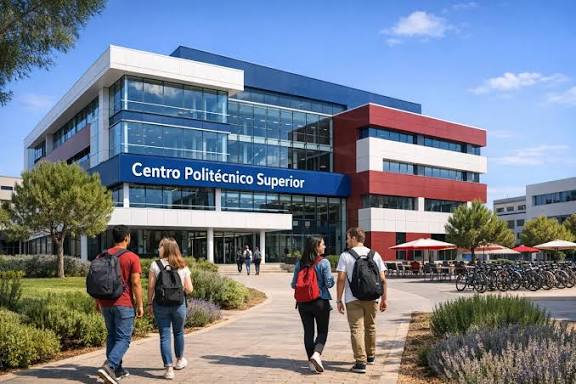
The Centro Politécnico Superior campus was designed to provide a modern and functional environment for technical education. Facilities included:
- Advanced engineering laboratories
- Computer and simulation centers
- Research institutes
- Lecture halls with multimedia technology
- Study spaces and collaborative work areas
The integration of teaching spaces with research labs created a dynamic academic atmosphere where students could engage directly with ongoing projects.
Being located in Zaragoza also offered students access to a vibrant cultural and social environment. The city’s strategic location between Madrid and Barcelona made it a hub of transportation, commerce, and academic exchange.
Internationalization and European Integration
As part of the University of Zaragoza, CPS actively participated in European academic exchange programs such as Erasmus. International partnerships allowed students to study abroad and welcomed foreign students to Zaragoza.
These exchange programs enhanced cultural diversity and provided students with global perspectives in engineering practice.
Collaborative research initiatives with European universities strengthened CPS’s reputation and integrated it into broader scientific networks across the continent.
Institutional Evolution
Over time, structural reforms within the University of Zaragoza led to organizational changes. The Centro Politécnico Superior eventually evolved into what is now known as the Escuela de Ingeniería y Arquitectura (EINA). This transformation aimed to modernize governance structures and align academic offerings with European higher education standards.
Despite these changes, the legacy of CPS continues to influence engineering education in Zaragoza. Many alumni, faculty members, and researchers who were part of CPS remain active contributors to Spain’s technological landscape.
Alumni Impact and Career Success
Graduates of Centro Politécnico Superior have gone on to build successful careers in:
- Multinational engineering firms
- Energy and infrastructure companies
- Technology startups
- Government agencies
- Academic and research institutions
CPS alumni are known for their strong technical foundation, problem-solving abilities, and adaptability in fast-changing industries.
The institution’s emphasis on rigorous training and ethical responsibility prepared engineers not only to excel technically but also to contribute responsibly to society.
Contribution to Regional Development
The presence of Centro Politécnico Superior significantly impacted the economic and technological growth of Zaragoza and the broader Aragon region.
By producing highly skilled engineers and fostering research innovation, CPS supported:
- Industrial modernization
- Infrastructure development
- Environmental sustainability projects
- Technological entrepreneurship
Engineering expertise generated at CPS helped local industries remain competitive in both national and international markets.
Student Life and Academic Culture
Beyond academics, student life at CPS was characterized by collaboration, innovation, and community engagement. Engineering student associations organized:
- Technical workshops
- Robotics competitions
- Hackathons
- Career fairs
- Academic conferences
This vibrant extracurricular culture helped students develop leadership skills, teamwork abilities, and entrepreneurial thinking.
The academic environment encouraged curiosity, resilience, and continuous learning—qualities essential for engineers in the modern world.
Challenges and Adaptation in a Changing World
Like many higher education institutions, Centro Politécnico Superior faced challenges such as:
- Rapid technological change
- Increasing competition among universities
- Funding constraints
- The need for digital transformation
However, its integration into broader university reforms allowed it to adapt successfully. Curriculum updates incorporated emerging technologies, and research priorities shifted toward sustainability, digitalization, and global challenges.
Legacy and Future Outlook
Although Centro Politécnico Superior no longer operates under its original name, its legacy continues within the engineering structures of the University of Zaragoza.
The values established by CPS—technical excellence, research innovation, and industry collaboration—remain central to engineering education in Zaragoza today.
As global challenges such as climate change, digital transformation, and sustainable development continue to evolve, the foundational principles laid by CPS remain highly relevant.
Conclusion
Centro Politécnico Superior stands as a significant chapter in the history of Spanish engineering education. As a major academic entity within the Universidad de Zaragoza in Zaragoza, CPS helped shape decades of engineers who contributed to industry, research, and society.
Through its comprehensive academic programs, strong research culture, and close industry ties, CPS played a transformative role in regional and national development. Even after institutional restructuring, its impact continues through its successor institutions and accomplished alumni.
The story of Centro Politécnico Superior reflects the broader evolution of engineering education in Europe—where tradition meets innovation, and knowledge becomes the foundation for progress.
