
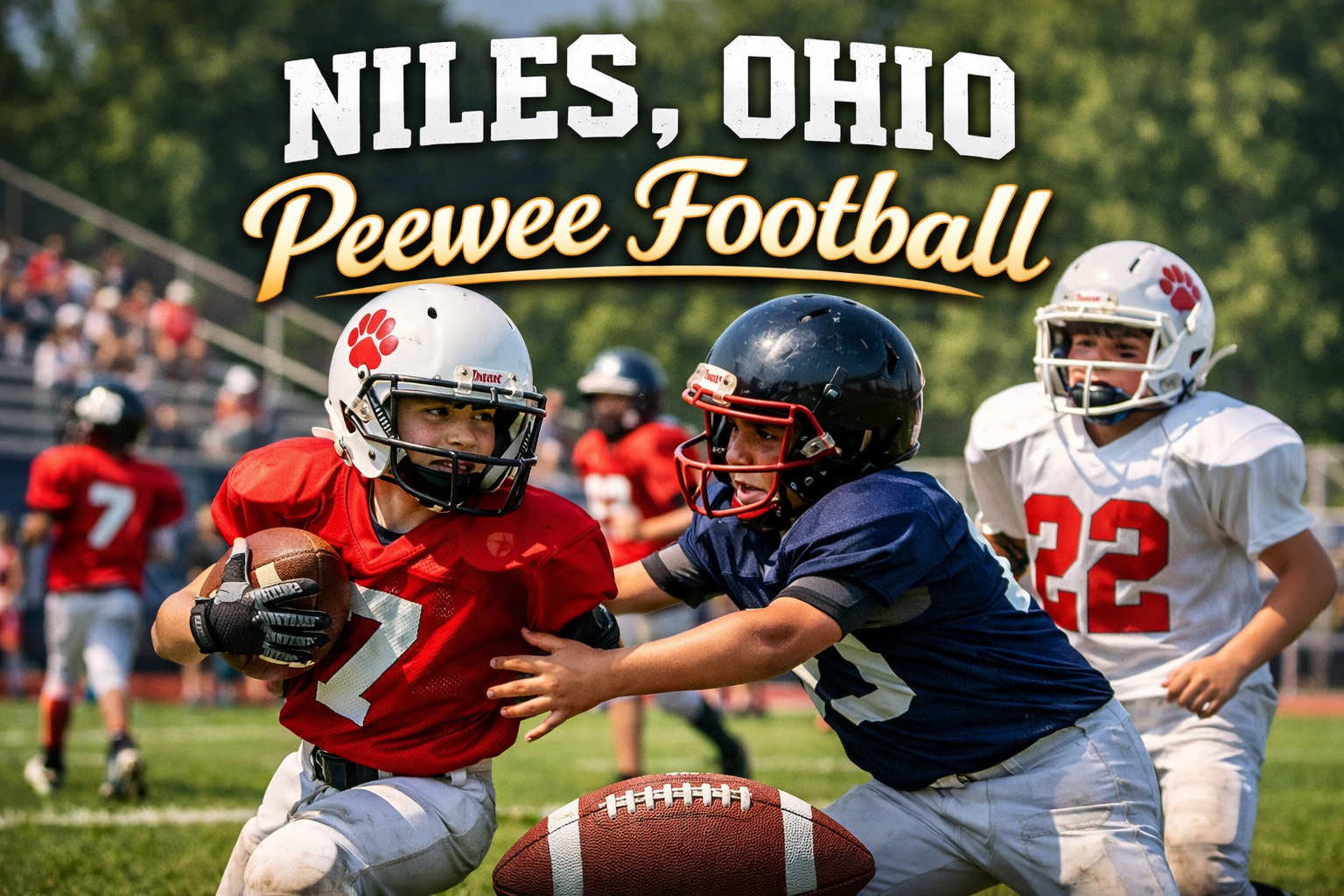
In small‑town America, youth sports often serve as the heartbeat of the community, shaping childhood memories, nurturing local pride, and teaching invaluable life lessons. In Niles, Ohio, one of the most cherished and impactful of these programs is Peewee Football — a youth football league that has become more than just a sport. It’s a place where young athletes first learn the fundamentals of football, develop confidence, forge friendships, and become connected to a tradition that defines the community’s spirit.
This article explores the history, structure, values, impact, and future of Peewee Football in Niles — illuminating why it matters so deeply to players, families, coaches, and neighbors alike.
1. The Roots of Football in Niles
Football in Niles didn’t begin with its high school varsity teams or even with formal leagues. It started on neighborhood lawns, in churchyards, and in school playgrounds — children tossing an oblong ball, dreaming of touchdowns, and learning the thrill of competition.
As the sport grew in national popularity throughout the 20th century, the need for organized youth programs became clear. Parents, educators, and community leaders saw that children weren’t just spectators; they wanted to actively participate. The result was the development of youth football structures tailored for younger ages — and thus Peewee Football was born.
In Niles, Peewee Football began as a grassroots initiative, focused not on professional training but on inclusion: giving every child with a desire to play a chance to step onto the field.
2. What Is Peewee Football?
The term “Peewee Football” refers to organized football for children typically between the ages of 6 and 12. It emphasizes:
- Basic Skills Development — understanding positions, learning to throw, catch, block, and tackle in a safe environment.
- Rules and Safety — teaching proper techniques, sportsmanship, and respect for coaches, referees, and teammates.
- Teamwork and Discipline — players develop commitment, collaboration, and accountability.
In Niles, the league incorporates flag football, tackle football, and age‑appropriate rules designed for safety and enjoyment.
3. Structure of the Niles Peewee Football Program
The program is structured into multiple age divisions, ensuring that children play with peers of similar age and ability:
• Flag Football (Ages 6–8)
For the youngest participants, flag football provides a non‑contact introduction to the game. Players learn:
- The basics of offensive and defensive positioning
- Agility and spatial awareness
- Strategy without full physical contact
Flag football builds confidence while minimizing injury risk.
• Tackle Football (Ages 9–12)
As children grow and gain confidence, tackle football becomes available. Here the focus shifts to:
- Proper tackling techniques
- Strength and conditioning
- Positional play (quarterback, running back, linebacker, etc.)
Even in tackle leagues, coaches stress safety above all, with practices designed around proper form and injury prevention.
• Practices and Games
The season typically runs in the late summer to fall months, with:
- Weekly practices after school
- Games each weekend
- Team evaluations, scrimmages, and end‑of‑season events
Parents, volunteers, and community leaders coordinate facilities, equipment, and refereeing — all driven by a shared passion for youth development.
4. Coaching — More Than Just X’s and O’s
One of the defining features of Niles Peewee Football is its volunteer coaching staff — parents, former players, and community members who dedicate countless hours each season.
These coaches bring more than football knowledge; they bring heart.
The Role of the Coach
Coaches in the Niles program wear many hats:
- Technical instructor
- Mentor
- Motivator
- Role model
They teach children how to block or throw, yes — but also how to:
- Respect opponents
- Accept defeat gracefully
- Celebrate success humbly
- Persevere through challenges
For many children, their first coach becomes one of their most influential adult role models.
5. Values Beyond the Field
While touchdowns and tackles are exciting, the true value of Peewee Football in Niles lies in the life lessons it teaches.
Teamwork and Cooperation
Football is the most collaborative sport in America. No player can succeed alone — every touchdown requires a coordinated effort. Children learn that:
- Success depends on others
- Communication matters
- Each role is important
Discipline and Responsibility
Between practices, fitness drills, and playbook learning, children develop:
- Time management
- Commitment to performance
- Respect for rules and authority
Resilience Under Pressure
Sports inevitably involve setbacks — losses, mistakes, injuries. Peewee Football teaches young athletes how to recover, adjust, and keep going.
Friendship and Community
The bonds formed on the sidelines — high‑fives, shared drills, post‑game snacks — often persist beyond the season, forming friendships that shape adolescence.
6. Parental Involvement — A Community Affair
Parents in Niles rarely sit passive onlookers; they are active participants in their children’s athletic journey.
Some common ways parents engage:
- Coaching and assistant roles
- Fundraising and equipment coordination
- Snack schedules and team dinners
- Sideline cheering and encouragement
This involvement strengthens family bonds and brings the community together. Niles Peewee Football becomes not just a sports activity — but a shared experience linking generations.
7. Safety — A Priority, Not a Buzzword
In recent years, youth football has faced increased scrutiny over safety concerns, especially related to concussions. Niles Peewee Football addresses these concerns proactively:
Certified Training
Coaches receive training in:
- Proper tackling techniques
- Identifying signs of injury
- Emergency response
Age‑Appropriate Equipment
Players use:
- Helmets that fit properly
- Shoulder pads and protective gear
- Regular safety inspections
Emphasis on Non‑Contact Play for Younger Ages
Flag football for younger children reduces physical collisions, allowing participants to learn fundamentals without full contact stress.
Safety remains a community priority — ensuring that enthusiasm for the sport is matched with care for children’s well‑being.
8. Season Highlights and Traditions
Each year, the Niles Peewee Football season brings cherished traditions:
Opening Day
Families arrive early, teams take the field for the first time, and there’s a palpable excitement in the air. It’s not just about competition; it’s about celebration — welcoming a new generation of athletes.
Homecoming Games
Some seasons incorporate themed homecoming weekends that spotlight teamwork, community pride, and festivity.
End‑of‑Season Awards
Players are recognized for more than just athletic performance — awards celebrate:
- Leadership
- Sportsmanship
- Team spirit
- Most improved
These traditions reinforce values far beyond competition.
9. Success Stories — More Than Wins and Losses
Success in Niles Peewee Football isn’t only measured by wins. It’s seen in:
- A child who overcomes shyness to become a confident team leader
- A player who learns to persevere after missing a game‑winning play
- A family that bonds through shared game days
- A community that rallies around its youth
Many former peewee players have gone on to play at middle school, high school, and even collegiate levels — but just as many have become coaches, parents, or volunteers, keeping the tradition alive.
10. Challenges and Growth
Like any community program, Niles Peewee Football faces challenges:
Funding and Resources
Maintaining equipment, uniforms, and field space requires ongoing financial support.
Volunteer Recruitment
Dependence on volunteers means the program thrives when the community stays engaged.
Cultural Shifts
As attitudes toward youth contact sports evolve, the league must continue prioritizing safety while preserving the joy of play.
Yet with these challenges come opportunities — for innovation, collaboration, and deeper community investment.
11. The Role of Schools and Local Organizations
Local schools and civic organizations help support the program in many ways:
- Providing fields and facilities
- Supporting fundraising efforts
- Encouraging student‑athlete progress
When schools and community groups work together, children benefit from a more connected and supportive environment.
12. The Ripple Effect on Niles
Peewee Football in Niles does more than shape athletes; it shapes the community:
Boosting Local Pride
On game days, families line the fields, neighbors pause to watch, and small victories become community celebrations.
Building Community Engagement
Parents meet other parents, children make friends from different schools, and local businesses may sponsor teams — strengthening social bonds.
Teaching Community Responsibility
Players learn that they represent not just themselves, but their families and town.
13. Voices from the Field
While this article cannot quote real participants directly, it’s easy to imagine the perspectives of those involved:
- A new player’s excitement at their first touchdown
- A coach’s pride in teaching fundamentals and seeing kids improve
- Parents cheering louder than anyone in the stands
- Teammates celebrating together after a hard‑fought win
These voices echo throughout the season, shaping a shared narrative of growth.
14. Beyond Football — Lifelong Lessons
The lessons learned in peewee football often translate to:
- Academic perseverance
- Social confidence
- Leadership in school and community
- Respect for others
- Healthy lifestyles
Many former peewee players speak years later about how the experience shaped their outlook on teamwork, resilience, and personal responsibility.
15. Looking to the Future
Looking ahead, Niles Peewee Football continues to evolve:
- Embracing new training techniques
- Enhancing safety measures
- Reinforcing community outreach
- Encouraging broader participation
The core mission remains constant: to provide a positive, growth‑oriented environment where young people can thrive.
Conclusion — A Legacy of Heart and Hustle
In Niles, Ohio, Peewee Football is more than a youth sports program. It is a tradition — a shared experience that connects generations, strengthens family bonds, and prepares young people not just for the next level of play, but for the many challenges and opportunities of life.
From the thrill of the first kickoff to the lessons learned in teamwork, resilience, and leadership, the impact of Peewee Football resonates far beyond the grass turf. It lives in the confidence of the players, the pride of the parents, and the heart of the community.
Niles Peewee Football stands as a testament to the power of youth sports — not just to create athletes — but to shape citizens, leaders, and lifelong learners.
