
Introduction
As the world faces increasing energy demands, climate change, and the depletion of fossil fuels, scientists and policymakers are searching for sustainable and reliable alternatives. Among all emerging energy technologies, fusion energy stands out as one of the most promising solutions. Often described as the “holy grail” of energy, fusion has the potential to provide nearly unlimited power while producing little to no greenhouse gas emissions.
Fusion energy is not a new concept; it is the same process that powers the sun and stars. However, recreating this powerful reaction on Earth has proven to be one of the greatest scientific and engineering challenges of modern times. Despite decades of research, recent breakthroughs have renewed global interest and optimism about the future of fusion power.
This article explores fusion energy in detail, explaining how it works, why it matters, the progress made so far, and the challenges that remain before it can become a practical energy source.
What Is Fusion Energy?
Fusion energy is produced when two light atomic nuclei combine to form a heavier nucleus, releasing a massive amount of energy in the process. This reaction occurs under extremely high temperatures and pressures, similar to conditions found in the core of the sun.
The most commonly studied fusion reaction involves hydrogen isotopes, such as deuterium and tritium. When these isotopes fuse, they produce helium, a neutron, and a significant release of energy. This energy can then be converted into electricity.
Unlike fossil fuels, fusion does not rely on combustion, and unlike nuclear fission, it does not involve splitting heavy atoms. This fundamental difference gives fusion energy several unique advantages over existing power sources.
Fusion vs. Fission: Understanding the Difference
Fusion energy is often confused with nuclear fission, which is currently used in nuclear power plants. While both involve nuclear reactions, they are fundamentally different.
Nuclear fission works by splitting heavy atoms like uranium into smaller pieces. This process releases energy but also produces long-lived radioactive waste and carries risks such as meltdowns if not properly controlled.
Nuclear fusion, on the other hand, combines light atoms. It produces far less radioactive waste, and the reaction is inherently safer. If something goes wrong in a fusion reactor, the reaction naturally stops rather than escalating uncontrollably.
This safety advantage is one of the key reasons fusion energy is considered a next-generation power source.
How Fusion Energy Works
To achieve fusion, atomic nuclei must overcome their natural repulsion. This requires extremely high temperatures—often exceeding 100 million degrees Celsius—to create a state of matter known as plasma.
In this plasma state, electrons are separated from nuclei, allowing particles to move freely. Under these conditions, nuclei can collide with enough force to fuse together.
Scientists use two main approaches to control fusion reactions:
Magnetic Confinement
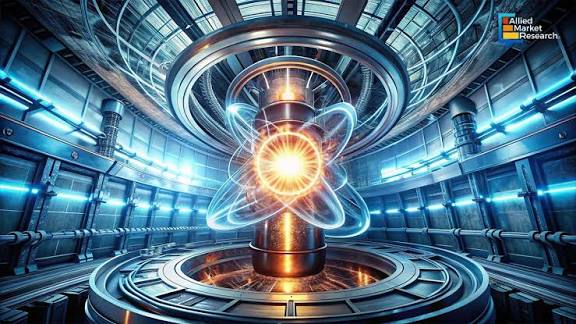
This method uses powerful magnetic fields to contain and control the hot plasma. Because plasma cannot touch solid walls without cooling down, magnetic fields act as invisible containers. Devices designed for this purpose are often donut-shaped and known as tokamaks or stellarators.
Inertial Confinement
In this approach, small fuel pellets are compressed using intense laser beams or particle beams. The compression generates extreme heat and pressure for a very short time, triggering fusion reactions.
Both methods aim to achieve a state where the energy produced by fusion exceeds the energy used to initiate the reaction, a milestone known as net energy gain.
Why Fusion Energy Matters
Fusion energy has the potential to transform the global energy landscape. Its benefits extend across environmental, economic, and geopolitical dimensions.
Clean and Low-Carbon Energy
Fusion produces no carbon dioxide emissions during operation. Unlike coal, oil, or natural gas, it does not contribute to air pollution or climate change.
Abundant Fuel Supply
Fusion fuel is widely available. Deuterium can be extracted from seawater, and tritium can be produced from lithium. These resources could supply humanity’s energy needs for thousands of years.
High Energy Output
Fusion reactions release enormous amounts of energy from very small amounts of fuel. A small quantity of fusion fuel can produce as much energy as tons of fossil fuels.
Improved Safety
Fusion reactors do not pose the same meltdown risks as fission reactors. The reaction requires precise conditions, and any disruption causes it to stop immediately.
Reduced Nuclear Waste
Fusion produces significantly less radioactive waste, and what waste is produced has a much shorter lifespan compared to fission-based nuclear power.
The History of Fusion Research
The idea of harnessing fusion energy dates back to the early 20th century, when scientists first began to understand how stars generate energy. During the mid-1900s, fusion research gained momentum as part of broader nuclear science programs.
Early experiments faced significant technical challenges, particularly in maintaining stable plasma conditions. Progress was slow, leading some critics to label fusion as a technology that was always “decades away.”
However, sustained international research, improved materials, and advances in computing have gradually pushed fusion closer to reality.
Recent Breakthroughs in Fusion Energy
In recent years, fusion research has achieved several important milestones. Experiments have demonstrated controlled fusion reactions that release more energy than ever before.
One of the most significant achievements has been the demonstration of net energy gain, where the fusion reaction produces more energy than was used to start it. While these experiments were brief and not yet suitable for power generation, they represent a critical step forward.
Private companies have also entered the field, bringing fresh investment and innovative reactor designs. This combination of public and private research has accelerated progress and renewed optimism.
Challenges Facing Fusion Energy
Despite its promise, fusion energy still faces major obstacles before it can be commercially viable.
Extreme Temperatures and Materials
Containing plasma at temperatures hotter than the sun requires materials that can withstand intense heat, radiation, and magnetic forces. Developing such materials is a major engineering challenge.
Energy Efficiency
While net energy gain has been demonstrated in experimental settings, maintaining this gain continuously and at a scale suitable for electricity production remains difficult.
High Costs
Fusion research and reactor construction are extremely expensive. Large-scale facilities require billions of dollars in investment, which can slow development.
Tritium Availability
Tritium is rare and radioactive. Producing and handling it safely and efficiently is a key challenge for future fusion reactors.
Engineering Complexity
Fusion reactors involve highly complex systems that must operate in perfect coordination. Scaling these systems for commercial use is a significant hurdle.
Fusion Energy and Climate Change
As governments around the world commit to reducing carbon emissions, fusion energy is increasingly viewed as a long-term solution for climate change mitigation.
While renewable energy sources like solar and wind are expanding rapidly, they face challenges related to storage and intermittency. Fusion energy, by contrast, could provide constant, reliable power without emissions.
If successfully developed, fusion could complement renewables and help create a stable, low-carbon global energy system.
Economic and Global Impact
The widespread adoption of fusion energy could reshape the global economy. Countries would become less dependent on fossil fuel imports, reducing energy-related conflicts and improving energy security.
Fusion could also drive innovation, create high-skilled jobs, and support new industries in advanced manufacturing and materials science.
For developing nations, fusion energy could provide access to affordable and reliable electricity, supporting economic growth and improved living standards.
The Future of Fusion Energy
Most experts agree that fusion energy will not replace existing power sources overnight. Instead, it is expected to play a role in the energy mix over the coming decades.
Ongoing research focuses on improving reactor efficiency, reducing costs, and developing practical power plant designs. International collaboration remains crucial, as fusion research benefits from shared knowledge and resources.
While challenges remain, the pace of progress suggests that fusion energy is no longer a distant dream but a realistic possibility for the future.
Conclusion
Fusion energy represents one of humanity’s most ambitious scientific goals. By replicating the process that powers the sun, fusion offers the promise of clean, safe, and virtually limitless energy.
Although technical and economic challenges still stand in the way, recent breakthroughs have brought fusion closer to practical application than ever before. With continued investment, innovation, and global cooperation, fusion energy could play a vital role in addressing climate change and meeting the world’s growing energy needs.
As research advances, fusion energy stands as a powerful symbol of what science and technology can achieve in the pursuit of a sustainable future.
